
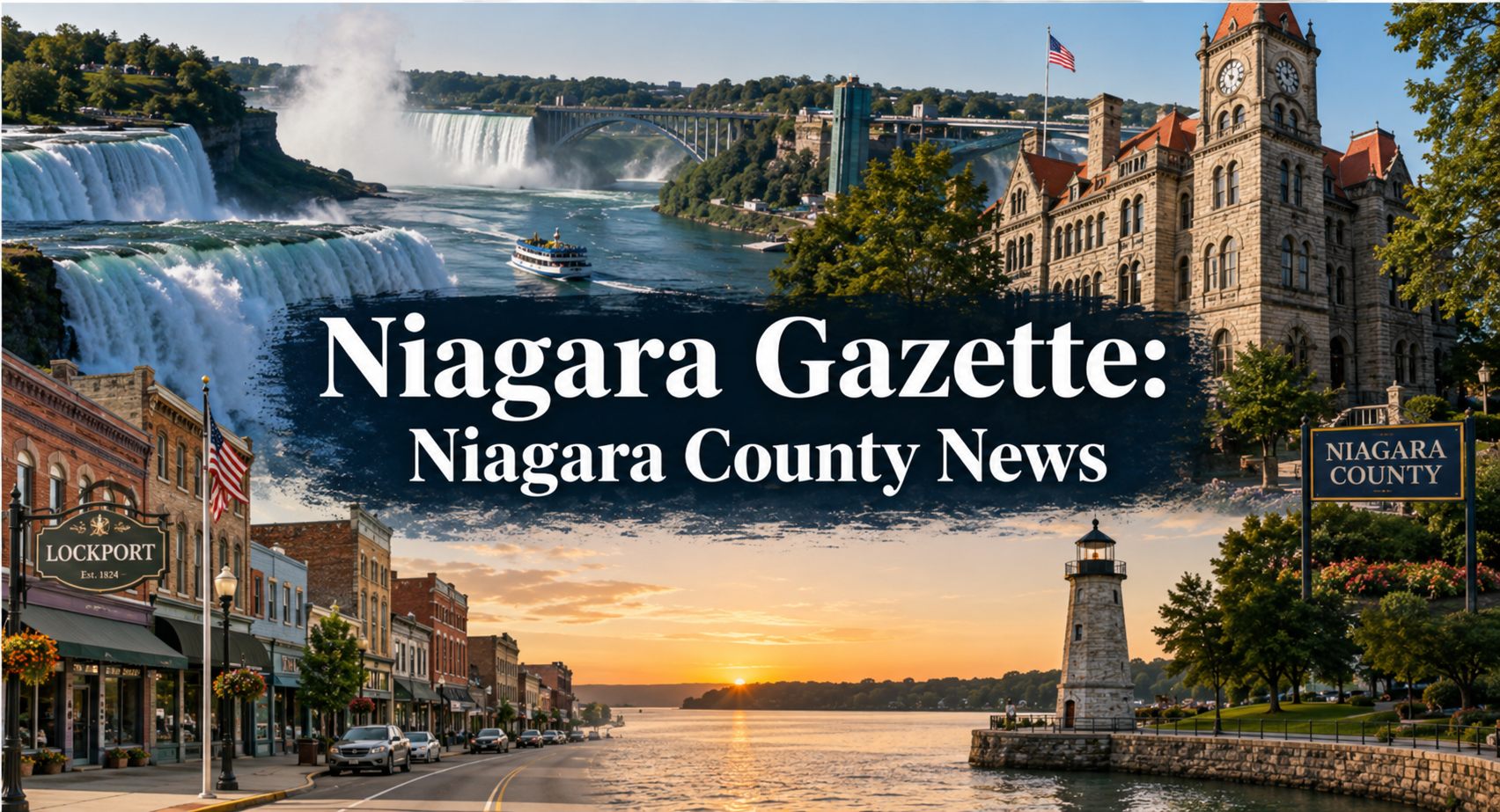

Big stories travel. Local consequences stay put. The Niagara Gazette matters because it reports on the decisions, disruptions, public debates, and community moments that can affect daily life across Niagara County long before those stories attract attention elsewhere. A city budget vote may change a neighborhood service. A school decision can reshape a family’s week. A development proposal may alter traffic, jobs, tax revenue, or the character of a familiar block.
National outlets aren’t built to follow those details. Regional television may cover the biggest event, then move on. Local reporting has a different job: stay close enough to notice what happens next.
That doesn’t mean every reader will use the paper in the same way. Some check breaking news. Others follow Niagara Falls government, crime reports, high school sports, obituaries, business activity, or community events. The real value appears when you read beyond the headline and connect individual stories to the larger pressures shaping Niagara County.
The Direct Answer
The Niagara Gazette is a long-running local news source focused on Niagara Falls and surrounding Niagara County communities. Readers use it for local government reporting, public safety updates, community news, sports, opinion, business developments, and other information that larger news organizations often cover only when a major event occurs.
Local News, Close Up
Local journalism works best when the subject is small enough to be ignored by outsiders but important enough to change someone’s day. That’s the territory a community newspaper occupies.
A road closure may look like a minor update until it affects a school bus route, a delivery schedule, or access to a neighborhood business. A council agenda can sound dull until it includes a tax change, a public works contract, or a proposal involving land near your home. Local reporting gives those matters a public record before rumors fill the gap.
The Gazette has deep roots in Niagara Falls. Historical newspaper records trace versions of the Niagara Falls Gazette into the nineteenth century, while the Library of Congress catalogs the present Niagara Gazette title from 1972 onward as a newspaper connected with Niagara Falls and Niagara County. That continuity matters because local communities are easier to understand when today’s disputes can be viewed beside older decisions.
Readers visiting the Niagara Gazette’s official news site aren’t necessarily looking for one kind of story. One person may want an urgent public safety update. Another may be checking a local sports result. Someone else may be following city government after seeing a brief social media post with no context.
A pattern I’ve noticed in local-news reading is that people often arrive because of one headline but stay because they discover a second issue that affects them more directly. That accidental discovery used to happen naturally while turning newspaper pages. Online readers have to be more deliberate about it.
The useful habit is simple: don’t treat the homepage as a single story. Treat it as a snapshot of what public institutions, neighborhoods, schools, businesses, and residents are dealing with at the same time.
A newspaper built around Niagara Falls serves a different purpose
Niagara Falls is globally recognizable, but residents don’t experience the city as a postcard. They experience utility work, property concerns, jobs, school schedules, public meetings, neighborhood safety, tourism pressure, housing questions, and the ordinary friction of local government.
That split creates an unusual reporting environment. The outside world may view Niagara Falls mainly through tourism. Local readers need reporting about the city as a place where people live.
Tourism still matters, naturally. Visitor activity can influence employment, public spending, traffic, development, downtown planning, and seasonal business conditions. Yet a tourism headline means something different to a hotel operator than it does to a resident concerned about road congestion or public resources. Good local coverage leaves room for both views instead of treating visitor numbers as the entire story.
Niagara County adds another layer. Communities within the county share regional concerns but don’t have identical priorities. A policy decision centered in Niagara Falls may have limited effect elsewhere. A county-level decision may reach residents across municipal boundaries. Readers need to notice which government body is acting because “local government” isn’t one large office.
This is where casual reading causes trouble. People see the name of a public agency, assume it controls an issue, and direct frustration toward the wrong place. City authority, county authority, school district responsibility, state oversight, and federal involvement can overlap without being interchangeable (bureaucracy loves a crowded room).
The third thing worth noticing is geography. A story may be locally important even when it happens outside your immediate neighborhood. Development near a major road can shift traffic. Changes involving public transportation can affect access to jobs. Decisions about regional attractions may influence seasonal employment.
And yes, border activity also shapes how people think about the Niagara area. Cross-border travel, commerce, tourism, and wait times can affect local routines, but border policy itself is a much larger subject with federal agencies, international rules, and economic consequences attached to it…but that’s a different article.
The Gazette’s strongest role isn’t making every story sound enormous. It’s showing where an apparently narrow decision connects with the wider county.
What most people get wrong about local news
The lazy criticism says local newspapers publish only crime briefs, meeting coverage, sports scores, and community announcements. That complaint usually comes from people who want every article to feel like a national investigation.
Frankly, it misses the point.
A public meeting story doesn’t need a dramatic scandal to be useful. Residents may need to know that a project was approved, a contract was awarded, a public hearing was scheduled, or a service change was discussed. Those facts become more important later, especially when someone asks, “When did this happen?”
Another mistake is judging local reporting only by social media reaction. A post with hundreds of comments may contain less useful information than a quiet article explaining a budget proposal. Engagement measures emotion. It doesn’t reliably measure civic value.
The same problem appears when readers dismiss routine crime reporting. A single police item may offer limited context, and early details can change. Yet a pattern across several reports may raise questions about a location, public safety strategy, court activity, or neighborhood concern. The answer isn’t to treat every arrest as proof of a wider trend. The answer is to read carefully and distinguish allegations, charges, court outcomes, and confirmed facts.
People also complain that a local story “doesn’t tell the whole story” when the event happened only hours earlier. Sometimes that criticism is fair. Sometimes the missing information hasn’t been released. Reporting is a timeline, not magic.
Look at a realistic example. A major fire disrupts traffic and draws an emergency response. The first report may identify the location and road restrictions. A later update may explain injuries, damage, cause, or business impact. Expecting the first item to answer every question encourages speculation.
The pattern I keep seeing is that readers reward speed, then punish uncertainty. Those demands conflict. Fast reporting often begins with verified fragments. Deeper reporting takes calls, records, interviews, and time.
One more misconception deserves a little irritation: local reporting isn’t valuable only when it agrees with you. Coverage of a public official, development proposal, school decision, or police matter may challenge your assumptions. That discomfort isn’t evidence of failure.
Sometimes the useful article is the one that forces you to separate what you heard from what the public record actually says.
Reading it with better filters
A local newspaper becomes more useful when you stop asking only, “What happened?” and begin asking, “Who made the decision, what changes now, and what remains unresolved?”
Those questions protect you from headline-only conclusions.
Suppose Niagara County announces work involving a public facility. The first detail to check is scope. Is the project approved, proposed, delayed, funded, or merely under review? Those words aren’t interchangeable. A proposal can generate public debate without ever becoming final.
Next, look for the responsible authority. County legislators, a city council, a school board, a planning body, and a state agency may each control different pieces. Readers often blame the most visible official even when that person lacks direct authority over the decision.
Dates matter too. Public hearings, application deadlines, construction periods, election dates, service interruptions, and meeting schedules turn general news into usable information. Missing a date can mean missing the only practical part of the story.
For readers tracking the county beyond one publication, broader Niagara County news coverage can provide another view of local developments and help reveal which issues continue across several news cycles.
But don’t confuse reading more sources with collecting more opinions. Five reposts of the same claim don’t equal five independent confirmations. Trace information back to the reporting, public document, agency statement, or named source that supports it.
My own preference is to separate immediate reading from follow-up reading. During breaking news, I want verified basics. A day later, I want context, consequences, and unanswered questions. Those are different products, even when they appear under the same publication name.
And read corrections when they appear. A corrected detail isn’t automatically proof that the whole report was unreliable. Refusing to correct an error would be worse.
The trade-offs are real
Local news has limits, and pretending otherwise doesn’t help readers.
Newsrooms have finite reporting time. One reporter may need to cover government activity, breaking events, court developments, community concerns, and follow-up stories within the same week. That pressure affects which meetings receive coverage and how deeply every subject can be pursued.
The cost appears in several forms. Some stories rely heavily on official statements because independent reporting takes longer. Some community issues receive attention only after residents repeatedly raise them. Certain topics produce frequent updates while quieter policy changes receive less public interest.
Digital access may also involve subscription limits or changing promotional offers. Exact pricing can change, so readers should check current terms rather than rely on an old screenshot or social media complaint. A subscription decision comes down to frequency of use. Someone checking one headline each month will judge the value differently from a resident who follows government, schools, sports, obituaries, and public safety every week.
There’s another trade-off that rarely gets discussed: local familiarity can improve reporting, but it can also shape reader expectations. People know the streets, institutions, families, and political history behind a story. They may assume a reporter should include every piece of background in every article.
That isn’t realistic.
A city government article can’t retell decades of political conflict each time a vote occurs. A development story can’t explain the full industrial history of a site in every update. Readers sometimes need to follow earlier coverage or examine source documents.
The downside of online publishing is that individual articles feel detached. A printed newspaper placed several related stories beside one another. A website may scatter them across dates, categories, search results, and recommendation boxes. Context gets fragmented.
A practical scenario shows the problem. Imagine a redevelopment proposal moving through review over several months. The first story introduces the idea. A later report covers public reaction. Another explains financing. The final vote appears in a separate article. Reading only the final headline can make a long process look sudden.
Local reporting also faces a trust problem created partly outside local journalism. National political anger spills downward. Readers may approach a city hall story with assumptions formed by cable television or national social media debates, even when the local issue concerns zoning language, equipment purchases, or road maintenance.
The healthiest response isn’t blind trust. It’s informed skepticism: check names, dates, documents, quotes, and what the article clearly labels as unknown.
Coverage works differently at each level
Local, regional, and national outlets can report on the same event while answering different questions. One isn’t automatically better. The right source depends on what you need to know.
| News source | Usually strongest at | Common limitation | Best reason to use it |
|---|---|---|---|
| Niagara-focused local reporting | Municipal decisions, neighborhood effects, local institutions, community response | Staff and reporting time may be limited | Understanding how an issue affects daily life nearby |
| Western New York regional media | Major weather, transportation, regional politics, large public events | Smaller Niagara stories may receive brief treatment | Seeing how Niagara connects with the Buffalo region |
| Statewide news organizations | Albany policy, state agencies, elections, major legal changes | Local consequences may receive little detail | Understanding the state rules behind a county issue |
| National outlets | Federal policy, major economic trends, nationally significant events | Routine local developments are usually absent | Connecting local effects with a national decision |
| Official government sources | Meeting documents, notices, agendas, direct statements | Limited independent questioning or outside perspective | Confirming primary details and public records |
The mistake is expecting one outlet to do every job.
Consider a winter storm. A national forecast may explain the large weather system. Regional television may track snowfall, road conditions, and closures across Western New York. Local reporting may identify neighborhood effects, municipal responses, local cancellations, emergency information, and what happens after the storm passes.
Those layers complement one another.
The same structure applies to economic news. A national report may discuss inflation or interest rates. State coverage may examine policy. A local article can show what a new project, closure, grant, or property decision means for workers and taxpayers in Niagara County.
I’ve found that readers become frustrated when they choose a source designed for one scale and expect detail from another. A national article won’t usually explain a Niagara Falls council disagreement. A local breaking-news item may not explain an entire federal policy.
One odd result of online search is that scale becomes harder to see. A national publication, government page, neighborhood post, and local newspaper can appear beside one another in identical-looking search results. Authority depends on the question, not the size of the logo.
For an evacuation notice, direct local information may matter most. For a federal border rule, the responsible government agency may be stronger. For community reaction, local reporting has the better angle.
Use the Gazette without missing the wider story
Reading local news well takes a little more effort than scrolling headlines. Not much. The goal is to create a routine that catches urgent information without allowing every dramatic update to control your attention.
Here’s a practical checklist:
- Scan the main local headlines first. Look for government decisions, public safety information, weather effects, school updates, major business news, and transportation changes. Don’t open every story. Identify what could affect your household, work, neighborhood, or plans.
- Open the story and check its status. Determine whether the event is confirmed, developing, proposed, approved, under investigation, or awaiting a vote. Early reports often contain uncertainty, and a headline can’t carry every qualification.
- Find the responsible institution. Note which city, county, school district, court, authority, or state agency is involved. This prevents the common mistake of blaming or contacting an office that doesn’t control the issue.
- Read past the first few paragraphs. Important dates, costs, public comments, restrictions, and next steps often appear lower in the article. Social media previews usually remove those details.
- Check for a later update. Breaking stories can change after officials release records, charges are reviewed, votes occur, or damage is assessed. Search the topic again rather than assuming the first article is final.
- Compare only when comparison adds value. Use regional reporting for wider context, official records for primary details, and another local source when an issue is disputed. Don’t collect duplicate summaries and mistake repetition for proof.
That process may sound formal, but it becomes automatic.
A resident following a proposed housing development might begin with the news report, then look for the meeting date, planning documents, traffic concerns, public comments, and the final vote. Someone tracking a school change may focus on the district involved, implementation date, transportation effects, and available family guidance.
Sports readers use a similar method without calling it research. They check a score, then read the game account, examine standings, and watch what happens next. Context changes the meaning of the result.
Public safety stories need extra care. Early information may come from law enforcement, emergency officials, witnesses, court records, or public statements. Each source answers different questions. An arrest isn’t a conviction. An investigation isn’t a completed finding. A reported cause may remain preliminary.
This is where headlines can mislead even when technically accurate. The headline compresses. The article qualifies.
Another pattern I’ve noticed is that readers often skip public meeting stories until a decision becomes inconvenient. Then they ask why nobody warned them. The warning may have appeared weeks earlier in an agenda story, hearing notice, or proposal update that attracted little attention.
Civic information is rarely packaged like entertainment. Sometimes the important sentence is painfully ordinary: a hearing will be held on a certain date at a certain place.
Keep an eye on follow-up language too. Phrases such as “officials said more information will be released,” “the proposal returns for a vote,” or “the matter remains under review” signal that the story isn’t finished.
And resist the urge to decide what happened from comments alone. Comment sections can reveal public mood, personal experience, political frustration, useful questions, and complete nonsense in the same scroll.
Why do local stories disappear from national attention?
Local stories disappear because national news organizations select events with broad reach, unusual scale, major political importance, or strong public interest across several regions. Routine government decisions, neighborhood concerns, small-business changes, and county-level debates rarely meet that threshold.
That doesn’t make them unimportant.
A water main problem may affect only part of one city, yet it matters intensely to residents and businesses in that area. A school board policy may receive no national coverage while changing schedules or expectations for thousands of local families. Importance depends on proximity as much as audience size.
Niagara has another complication: the name itself attracts global attention. Stories involving the falls, tourism, major weather, border events, or unusual emergencies can travel widely. Once the dramatic element fades, national interest often fades with it.
Local consequences remain.
A major event can produce a burst of outside coverage focused on spectacle. The slower questions come later. How will repairs be funded? What changes did officials approve? Did businesses recover? Were public concerns addressed? Those follow-ups are rarely glamorous.
They’re also where accountability lives.
The tendency to chase only national attention can distort how residents understand their own community. People become highly informed about a political dispute hundreds of miles away while knowing little about a local budget, election, development proposal, or school decision.
That imbalance isn’t entirely the reader’s fault. National stories are promoted aggressively by large platforms. Local reporting competes against celebrity news, national outrage, viral video, sports debate, and endless recommendation feeds.
Still, attention is a choice.
The question I’d ask is simple: which story is more likely to change something you can see, use, pay for, vote on, attend, or question? The answer won’t always be local, but it will be local more often than your social feed suggests.
What Niagara County reporting can reveal over time
A single article records an event. A series of local articles can reveal a pattern.
That long view may be the Gazette’s most useful feature.
Repeated coverage can show how a public project changed from proposal to approval, how costs shifted, how officials explained delays, or how residents responded. It can also show which issues return year after year: infrastructure, tourism, housing, economic development, public safety, schools, environmental concerns, municipal finance, and neighborhood investment.
Historical continuity gives local newspapers another role. Newspaper collections preserve details that may not appear in formal histories, including advertisements, photographs, election arguments, business openings, public notices, sports results, and ordinary community life. The Niagara Falls Public Library maintains local-history collections that include extensive newspaper materials and Gazette-related archives.
Those records aren’t useful only to historians.
A resident researching an older property may look for previous owners, businesses, fires, construction, or neighborhood changes. A family researcher may search obituaries and announcements. A journalist may revisit earlier promises connected with a public project. A business owner may examine how a commercial district changed.
Online readers often underestimate archives because current news feels disposable. Yesterday’s update becomes tomorrow’s search result, then eventually part of the public memory.
But archives have weaknesses. Names may be misspelled. Early reports can contain information later corrected. Older coverage reflects the language, assumptions, and editorial choices of its time. A newspaper archive is evidence, not an infallible narrator.
The best research compares articles across dates and checks government records, maps, photographs, public documents, or other primary sources where needed.
For ongoing community issues, the same principle applies in real time. Save important links. Note meeting dates. Track who made a promise and what deadline was given. A claim that sounds convincing today may look different six months later.
I’ve watched many public debates become confusing because people remember the emotion but lose the timeline. They recall that officials argued, residents objected, or a project was delayed. They forget the original proposal.
Local reporting can rebuild that sequence.
The quiet strength of a community newspaper isn’t that every article becomes historic. It’s that nobody knows in advance which ordinary article will matter later.
Frequently Asked Questions
Is the Niagara Gazette mainly about Niagara Falls?
Yes, Niagara Falls is a central focus, but the publication also covers issues affecting the wider Niagara County area. Coverage can include county government, nearby communities, regional concerns, local sports, public safety, business developments, and events whose effects reach beyond the city.
Is the Niagara Gazette the same as a government news source?
No, a newspaper and a government office serve different roles. Government pages publish official notices, agendas, records, and agency statements. Local journalism can add reporting, outside reaction, questions, context, and follow-up that an official announcement may not provide.
How many news sources should Niagara County residents follow?
Three types are often enough: a local publication, a regional source, and the responsible government or public agency. You don’t need a huge list. The better approach is choosing sources that provide different information instead of repeating the same report.
Does the Niagara Gazette cover breaking news?
Honestly, it depends on the event and available information. Local publications commonly report urgent developments, but early stories may contain only confirmed basics. Check the publication again later because emergency response details, official findings, road conditions, or court information can change.
What is the best way to verify a local news story?
Start by reading the full article rather than relying on a headline or social post. Check named sources, dates, direct quotes, public documents, and the agency involved. For disputed issues, compare independent reporting with official records instead of counting repeated online claims.
Why are some local news articles short?
Because the confirmed information may be limited, especially during a developing event. A brief report isn’t automatically poor reporting. The popular misconception is that length always equals depth. A short update can be useful when it clearly separates known facts from unanswered questions.
Can old Niagara Gazette articles help with local history research?
A local newspaper archive can provide valuable names, dates, photographs, advertisements, obituaries, public debates, and descriptions of earlier community life. Researchers should still compare articles with library collections, government records, maps, and other sources because newspaper accounts can contain gaps or early errors.
Local attention still matters
Community news rarely arrives with a warning that it will matter later. A routine meeting can produce a lasting policy. A small development notice can become a major neighborhood debate. A short public update may answer the question residents ask months afterward.
The Niagara Gazette is most useful when you treat it as more than a stream of headlines. Read the details, identify who controls the issue, note the dates, and return for the follow-up.
Your concrete next step is simple: choose one Niagara County issue affecting your community today and trace its coverage backward before forming an opinion.
After years of comparing how local stories grow, fade, and return, one pattern remains hard to ignore: communities lose more than news when nobody keeps the record.