
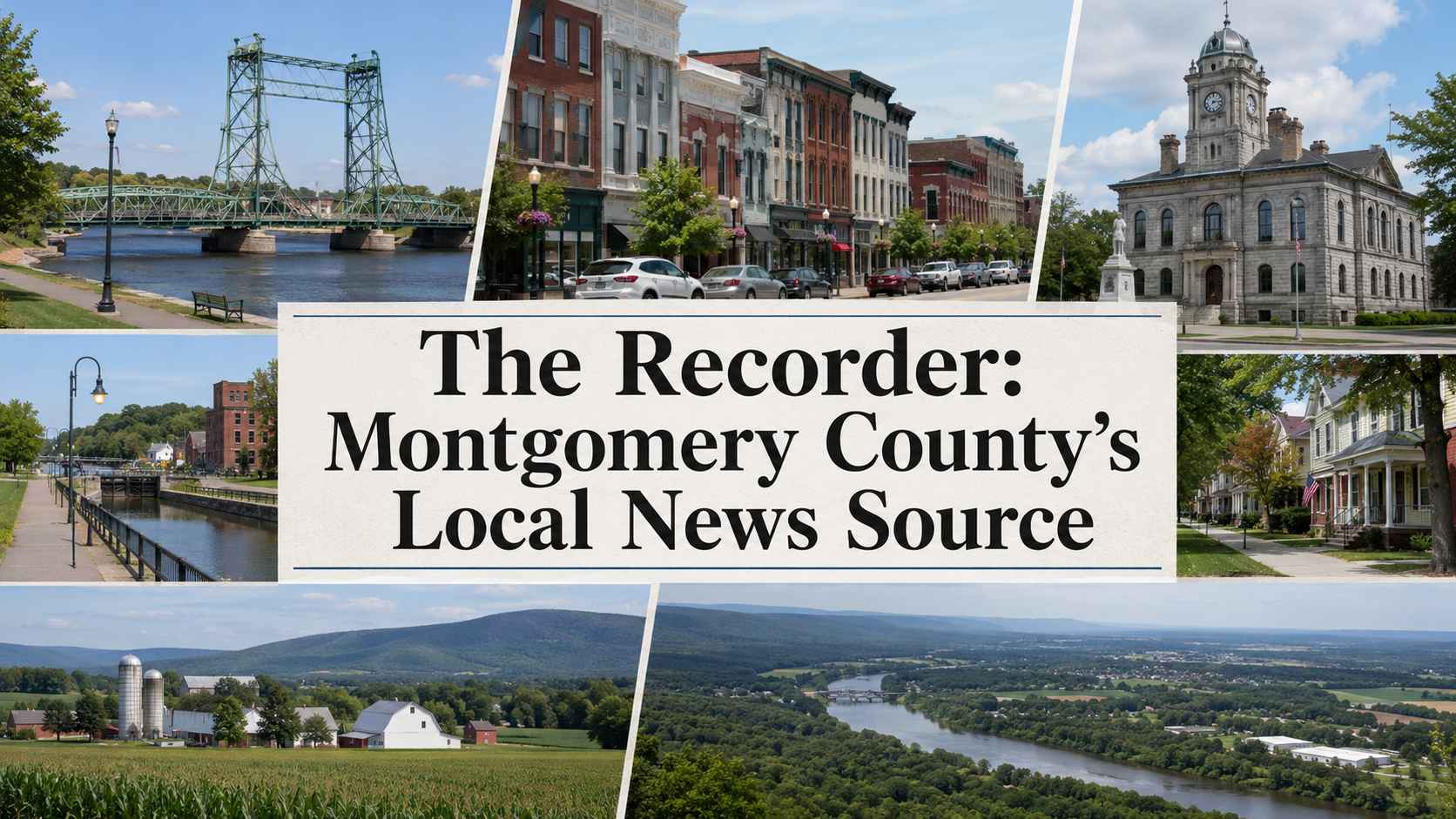

A zoning change near your street, a school budget vote, a new business in Amsterdam, or a county decision that changes a public service can affect you more directly than news from Albany or Washington. The Recorder gives Montgomery County residents a place to follow those decisions at the level where consequences become personal.
The Recorder is not useful because it tries to cover everything. Its value comes from staying close to the places, institutions, and people that shape daily life across the county. That includes local government, public safety, schools, business, community events, sports, and the smaller civic developments that are easy to miss until they touch your household.
For readers who want dependable Montgomery County news, the best habit is not endless scrolling. It is knowing which local source regularly returns to the same towns, meetings, debates, and public records. That continuity is where a community newspaper earns its place.
The Direct Answer for Readers
The Recorder is a local news source focused on Amsterdam and Montgomery County, giving readers ongoing coverage of government, schools, public safety, business, sports, and community life. Its strongest role is connecting day-to-day events with the local decisions and institutions that directly affect residents.
Local Coverage Matters
National news explains the pressures moving the country. State news tells you what lawmakers, agencies, and major institutions are doing. Local news answers a different question: what changed near you, and who made the decision?
That sounds simple, but it is where a surprising amount of public life becomes hard to follow. County legislatures, city councils, town boards, planning boards, school districts, police departments, courts, and local development agencies all produce information. Much of it is technically public. Very little of it arrives in a form that a busy reader can absorb before dinner.
A local newspaper turns scattered notices, meeting discussions, interviews, filings, and follow-up questions into a continuing record. The continuing part matters (which is often where the real story begins). One article about a proposed project gives you an announcement. Coverage over several months can show revisions, public objections, financing concerns, votes, delays, and the eventual effect on nearby residents.
I have noticed a recurring mistake in how people judge community reporting: they look at one day’s homepage and ask whether every story interests them. That is the wrong test. A local source proves its value over time, often when a topic you ignored for months suddenly affects your taxes, commute, child’s school, neighborhood, or business.
Montgomery County also has a mix of places with different concerns. Amsterdam’s city issues do not always match the priorities of smaller towns and villages. Agricultural questions, downtown redevelopment, housing, roads, emergency services, school enrollment, and business growth can pull attention in different directions (sometimes all in the same week). A paper grounded in the county can keep those threads visible without pretending they are identical.
That proximity creates accountability too. Officials know local statements can be compared with later actions. Residents can see who voted, what changed, and which questions remain unanswered. The result is not drama. Often it is a paragraph buried in a meeting story that becomes more valuable six months later.
Its value appears between major headlines
Breaking news attracts attention because it is immediate. A fire, serious crash, major arrest, election result, or sudden closure naturally draws readers. Yet the quieter work between those events is what gives a community source depth.
Consider a road project. The first announcement may describe the location, expected schedule, and public cost. Later reporting may explain detours, delays, contractor issues, business concerns, or changes in the work. A reader who sees only the first story gets the plan. A reader who follows local coverage gets the process, including the awkward parts that official announcements tend to smooth over.
The same pattern applies to schools. A budget is not only a total dollar figure. It can involve staffing, transportation, programs, building repairs, state aid, tax rates, enrollment, and public reaction. Those details rarely fit into a social post. They need context, and context usually requires more than one article.
For broader county coverage and related reporting, readers can also follow the latest Montgomery County news. Using more than one local source is not disloyal to either outlet. It is a sensible way to compare emphasis, catch updates, and see which details one newsroom may have developed further.
A pattern I see across local news is that readers remember the dramatic article but rely on the routine one. The dramatic story gets shared. The routine story tells you when a hearing is scheduled, why a tax bill changed, or which street will be closed next week. Not glamorous. Still useful.
Government reporting is often cumulative
A single meeting can be dull because much of local government happens through procedure. Motions are introduced, referrals are made, public comments are recorded, and votes are scheduled. The meaning becomes clearer when the same reporter follows the subject across several meetings.
That continuity can reveal movement that isolated summaries miss. A plan may begin with broad support, encounter cost concerns, lose a funding source, return in a smaller form, and finally pass with conditions. Each step changes the story. Without a local archive, residents are left reconstructing the sequence from agendas and memory.
Community stories create recognition
Local papers also cover the civic material that large outlets usually skip: volunteer efforts, library programs, school achievements, local arts, neighborhood events, nonprofit work, and high school sports. Critics sometimes dismiss these stories as soft news. That view misses their social function.
People participate more when they can see community activity documented. A small organization gains visibility. A student’s achievement becomes part of the public record. A local event reaches readers outside its usual circle. And a county begins to recognize itself in more than official disputes and emergency headlines.
Coverage Across Montgomery County
The Recorder’s strongest subject is Montgomery County itself, especially Amsterdam and the institutions that shape public life in the area. Readers should expect local government, public safety, education, courts, business activity, development, community events, sports, and human-interest reporting to form the core of that coverage.
The mix changes with the news (and it can shift quickly). Election season brings candidate profiles, campaign issues, voting information, and results. Budget season shifts attention toward school districts, municipalities, county spending, and tax questions. Severe weather can put roads, closures, utilities, and emergency response at the center. The calendar matters more in local reporting than many readers realize.
The official Recorder section of The Daily Gazette provides the publication’s current stream of stories and updates. The Recorder became part of The Daily Gazette’s regional news operation after the Gazette announced its acquisition of the Amsterdam newspaper and two weeklies in 2019.
Ownership matters, but it does not answer the question readers care about most: does the coverage remain specific enough to feel local? A regional news group can share editing, technology, subscriptions, photography, advertising, and production resources. The trade-off is that readers may worry about local identity becoming diluted. The only fair way to judge is by the reporting itself—how often it covers Montgomery County, how deeply it follows local issues, and whether residents can recognize their communities in the news mix.
Older newspaper records also show that the Recorder name is tied to a long newspaper lineage in Amsterdam. New York State Library listings trace Recorder-related titles through the late nineteenth and twentieth centuries, including the Morning Recorder and later combined titles. That history does not make every modern story better, but it explains why the name carries weight for generations of area readers.
Newspapers are memory systems
Local news serves the present, but it quietly builds an archive of how a community changed. That function is easy to overlook because today’s article feels temporary. Tomorrow it moves down the page. Months later, it may become the clearest available account of what officials said, why residents objected, or when a project changed direction.
This is the promised detour, because the archive role deserves more attention than it gets. Families use old papers to trace milestones. Researchers follow businesses, elections, property disputes, public works, school changes, and community organizations. Local historians compare coverage across decades. Newspaper archives are imperfect, sometimes incomplete, and shaped by editorial choices, but they preserve details that official records often leave out (the sort nobody thinks to save at the time).
Montgomery County’s own historical resources include extensive holdings of older periodicals and public records, which shows how local reporting can outlive the daily news cycle. A council minute may record that a vote happened. A newspaper story may preserve the argument around the vote, the concerns raised by residents, and the language officials used to defend it.
And there is a human layer. Obituaries, wedding announcements, sports results, business openings, festival coverage, school honors, letters, and photographs become fragments of shared memory. Years later, the “small” story can be the one a family searches for.
Digital publishing makes retrieval easier in some ways and more fragile in others. Search tools can surface an old article quickly, but website redesigns, broken links, changed paywalls, and incomplete migrations can make records harder to find. Preservation is a technical problem, an economic problem, and a civic problem—but that’s a different article.
The point here is narrower. A community newspaper does not only tell residents what happened today. It leaves evidence that people argued, built, served, competed, celebrated, failed, tried again, and made decisions in public. That record accumulates without much ceremony.
What most people get wrong about local papers
The laziest criticism of local news is that “nothing happens here.” It usually means nothing spectacular happened in front of the person saying it. Meanwhile, budgets are adopted, contracts are awarded, businesses open and close, court cases move, public hearings are held, schools change programs, roads are repaired, and volunteer groups keep filling gaps that government does not.
What annoys me is the expectation that a local paper should behave like a national entertainment feed. Readers complain about too much government coverage, then complain that a tax increase or project approval arrived without warning. They skip school board stories because the details feel dry, then want immediate answers when a program changes. The information was not hidden. It was simply less exciting than the argument that followed.
Another mistake is treating social media as a full replacement. Social platforms are fast, useful, and often the first place residents hear about an incident. They are also messy. Posts can lack dates, updates can be separated from original claims, rumors can outrun corrections, and the most emotional version tends to travel farther than the most accurate one.
A newsroom has its own limits, but reporting creates a process. Someone gathers information, identifies sources, asks questions, writes a coherent account, edits it, corrects errors when needed, and keeps the story accessible. That process is not magical. It is labor.
People also assume local means harmless. It does not. Coverage can affect reputations, elections, business relationships, public trust, and legal disputes. The closer a story is to home, the more likely readers know the people involved. That makes precision more necessary, not less (and it makes careless wording more damaging).
Then there is the complaint that community papers publish “too many positive stories.” Sometimes the criticism is fair; a newsroom should not become a bulletin board for institutions. But a local paper that covers only crime, conflict, and failure gives a distorted picture too. A county is not merely its arrests and political fights. Schools, sports, arts, volunteers, employers, libraries, and neighborhood groups are also public life.
The more useful standard is balance over time. Are officials questioned? Are claims checked? Are community achievements covered without turning every press release into news? Are difficult stories followed after the initial burst of attention? Those are tougher questions than counting how many headlines felt cheerful.
Choosing Your Access Point
Local news now reaches readers through several routes, and each one changes how you encounter information. Print encourages a broad scan. A website rewards active searching and quick updates. Social media is convenient for discovery but unreliable as a complete record. Email newsletters can create a useful routine, though they depend on what editors choose to feature.
The best choice depends on your habits, not on nostalgia. Some readers absorb more from a printed edition because the layout exposes them to stories they would never search for. Others need a phone-friendly site because they check news between work, errands, and family obligations. Neither group is more serious.
| Access point | Best for | Main strength | Main downside |
|---|---|---|---|
| Print edition | Broad local awareness | Encourages discovery beyond your usual interests | News may feel less immediate |
| Newspaper website | Current stories and archives | Searchable, shareable, and updated through the day | Paywalls or account steps may limit casual reading |
| Social media | Fast headline discovery | Convenient alerts and community discussion | Algorithms can hide stories and amplify rumor |
| Email newsletter | Building a regular habit | Delivers selected stories directly | You may miss items not included in the edition |
The trade-off most people overlook is control. On a newspaper site, you choose a section, search a topic, or scan the latest stories. On a social platform, an algorithm decides what rises. That algorithm may reward engagement rather than local significance (an easy mistake to miss). A heated comment thread about a minor dispute can crowd out a detailed report on a budget vote.
I have seen this pattern repeatedly: readers say a newsroom “never covered” an issue, then discover the article was published but never appeared in their feed. Social distribution feels like coverage itself, yet it is only one doorway. The platform is not the archive.
Cost is part of the choice too. Subscription prices, introductory offers, print delivery areas, and digital packages can change, so it is better to check the publication’s current terms than rely on an old figure. The honest downside is that paid local news asks readers to spend money on information they may be used to seeing free. The honest counterpoint is that reporting costs money even when the article looks effortless on a screen.
Use it without missing the stories that matter
Reading local news well is a small system, not a test of how many articles you can consume (and it should not feel like homework). You do not need to check every update. You need a way to notice the subjects that affect your life before they become urgent.
Here is one practical checklist you can set up today:
- Bookmark The Recorder’s main local page instead of relying only on social posts.
- Check the site at two predictable times each week, then look again during elections, severe weather, major incidents, or budget votes.
- Search recurring topics that matter to you, such as your school district, town, street project, employer, or local board.
- Open meeting and budget stories even when the headline sounds dry; scan for dates, votes, costs, deadlines, and public-comment details.
- Compare major local stories with another county source when the issue is disputed or still developing.
- Save articles tied to long-running projects so you can compare early promises with later outcomes.
- Read corrections, follow-ups, and updated versions before sharing a strong claim.
That routine works because it reduces dependence on chance. You stop hoping an algorithm will show you the one article you needed. You also become better at recognizing the life cycle of a local issue. Announcement. Debate. Vote. Implementation. Consequence. Those stages may be separated by weeks or months.
A realistic example is a school district proposal. The first story may describe a plan. A later one may explain costs and public feedback. Another may report a board vote. Months afterward, coverage may show how the decision affected staffing, transportation, or programming. Reading only the loudest headline leaves the middle blank.
Another example is economic development. A proposed business project can involve zoning, planning review, incentives, environmental questions, construction schedules, hiring claims, and later changes. Supporters and critics often speak with certainty before the facts settle. Saving the early coverage gives you something better than memory when promises are revisited.
One analyst habit I recommend is watching nouns and verbs. “Could create jobs” is not the same as “has hired workers.” “Seeking approval” is not “approved.” “Awarded funding” is not “construction completed.” Local reporting becomes easier to assess when you notice which stage the language actually describes.
And do not confuse speed with completeness. The first accurate report can still be incomplete because officials, witnesses, records, or court documents are not yet available. A follow-up is not repetition when it adds verified detail.
Costs, access, and newsroom limits
Community journalism carries costs and limitations that promotional descriptions often avoid. Small and regional newsrooms have finite staff (and readers can feel those limits). Reporters may cover several beats, multiple municipalities, breaking news, meetings, features, and routine briefs in the same week. That can create gaps even when the newsroom is working hard.
Not every public meeting will receive a full story. Not every town will appear with equal frequency. Some subjects generate steady coverage because they produce regular decisions and records; others surface only when a conflict, event, or major change occurs. Readers can fairly ask for broader attention, but no local outlet can place a reporter in every room.
Regional ownership brings another trade-off. Shared resources can support technology, editing, printing, advertising, and wider distribution. Yet consolidation can make readers worry about fewer local voices or less distinct community identity. The concern should not be dismissed. It should be tested against bylines, story depth, geographic reach, corrections, and the range of local institutions covered.
Paywalls create friction too. A subscription can support reporting, but it may limit access for residents who cannot afford another monthly expense. Free article allowances and special access can help, though policies change. This tension has no clean answer. Public-interest reporting needs revenue, while public access matters most when the topic concerns elections, emergencies, taxes, schools, or safety.
Mistakes happen. Names can be misspelled. Context can be missing. Early reports can change as more information arrives. The standard is not perfection; it is how the outlet responds. Does it correct the record clearly? Does it update a developing story? Does it distinguish confirmed facts from allegations? That response tells you more than a claim that errors never occur.
Honestly, some readers want local news to be free, instant, exhaustive, error-free, and tailored to their neighborhood. Those expectations collide. Speed competes with depth. Breadth competes with staff time. Free access competes with revenue. Personal relevance competes with the need to cover communities beyond your own.
The practical answer is not blind loyalty. It is informed use. Read critically, support work you find valuable, compare coverage when the stakes are high, and send a correction or tip when you have verifiable information. A local paper is a public-facing institution, but it is not a public utility with unlimited funding.
Why does Montgomery County still need reporting close to home?
Because local decisions are specific. Statewide reporting may explain New York education funding, housing policy, criminal justice, infrastructure, energy costs, or economic trends. Montgomery County readers still need to know how those forces land in Amsterdam, Canajoharie, Fonda, Fort Plain, St. Johnsville, and the county’s towns and school districts (even when the topic sounds statewide).
The gap between policy and impact is where local reporting works. A state grant announcement is broad. A local story can explain which project receives money, what work is planned, when it may begin, who supports it, and what questions remain. A statewide election result shows political direction. County-level reporting shows turnout, local races, ballot issues, and the officials who will make decisions close to home.
Local geography matters as well. Transportation, housing, downtown development, agriculture, tourism, public safety, flooding, aging infrastructure, and access to services do not affect every part of New York in the same way. Even neighboring counties can face different pressures because their economies, settlement patterns, tax bases, institutions, and road networks differ.
A question I often hear is whether regional coverage can replace county-specific reporting. Sometimes it can handle the broad story. It usually cannot replace the detail. A regional article may explain a trend across the Mohawk Valley or Capital Region. A county-focused report can identify the board vote, neighborhood, agency, school, road, employer, or timeline that makes the story useful to a resident.
This is also why local election coverage matters after Election Day. Campaign profiles and results are only the opening. Officeholders later make appointments, propose budgets, negotiate contracts, respond to emergencies, and vote on projects. Accountability is not a seasonal product.
The deeper value is attention. Communities change partly through decisions and partly through what receives sustained notice. A long-running housing problem, unsafe intersection, vacant property, business corridor, school concern, or public-service gap is easier to ignore when coverage arrives only after a crisis. Repeated reporting keeps the issue in public view, even when progress is slow and the headline is not dramatic.
But local news cannot do this alone. Residents must read past the headline, attend meetings when possible, ask officials direct questions, submit public records requests, share verified information, and correct rumors rather than feeding them. Journalism can make public life more visible. It cannot substitute for public participation.
Frequently Asked Questions
Is The Recorder focused only on Amsterdam?
Yes, Amsterdam is a central part of its coverage, but The Recorder also serves readers interested in wider Montgomery County news. The exact mix changes with events, public meetings, elections, schools, courts, business developments, and community activity across the county.
Can I read The Recorder online?
No, you do not have to rely only on a printed edition. The Recorder’s stories are available through The Daily Gazette’s website, though access rules, subscription options, and article limits can change. Check the publication’s current terms for the most accurate details.
How often should I check local news?
3 check-ins each week are enough for many readers, with extra visits during elections, storms, emergencies, budget season, or a major local debate. A regular habit works better than waiting for social media to surface a story after the decision has already been made.
Is social media enough for Montgomery County news?
Honestly, it depends. Social media is useful for alerts, eyewitness posts, and community discussion, but it is not a dependable full record. Algorithms hide stories, updates get separated, and rumors spread quickly. Use it as a signal, then verify important claims through reported coverage or official sources.
Does The Recorder cover local government meetings?
Coverage varies, but local government is a core subject for a county-focused newspaper. Readers should look for reporting on city, county, town, village, school, and development decisions. No newsroom can cover every meeting, so agendas and official minutes remain useful companions.
Why do some Recorder stories require a subscription?
Subscriptions help pay for reporting, editing, photography, publishing systems, and other newsroom costs. The common misconception is that digital news costs almost nothing because there is no paper in your hand. Producing reliable reporting remains labor-intensive even when delivery is online.
How can I tell whether a local story has been updated?
Check the publication time, update label, correction note, and any added statements near the top or bottom of the article. Developing stories often change as records and official comments become available. Reading the latest version matters more than relying on an early screenshot.
What should I do if I spot an error in a local article?
Contact the newsroom with the exact statement, the correction you believe is needed, and evidence that can be checked. Keep the message specific and calm. A verifiable document, direct source, or clear factual reference is more useful than a broad complaint about tone.
Keep the local habit
Community reporting becomes valuable before you urgently need it. The best next step is simple: bookmark The Recorder’s page today and choose two regular times each week to scan Montgomery County coverage, even when no major story is dominating attention.
That habit gives you context. You begin to recognize recurring officials, agencies, projects, schools, businesses, and debates. You can tell when a proposal is new, when an old promise has returned, and when a headline leaves out the history that changes its meaning.
The Recorder does not need to be your only news source to be useful. It needs to keep showing up where public decisions become local consequences. In my experience, the readers who understand a community best are rarely the ones who consume the most headlines. They are the ones who keep paying attention to home.