
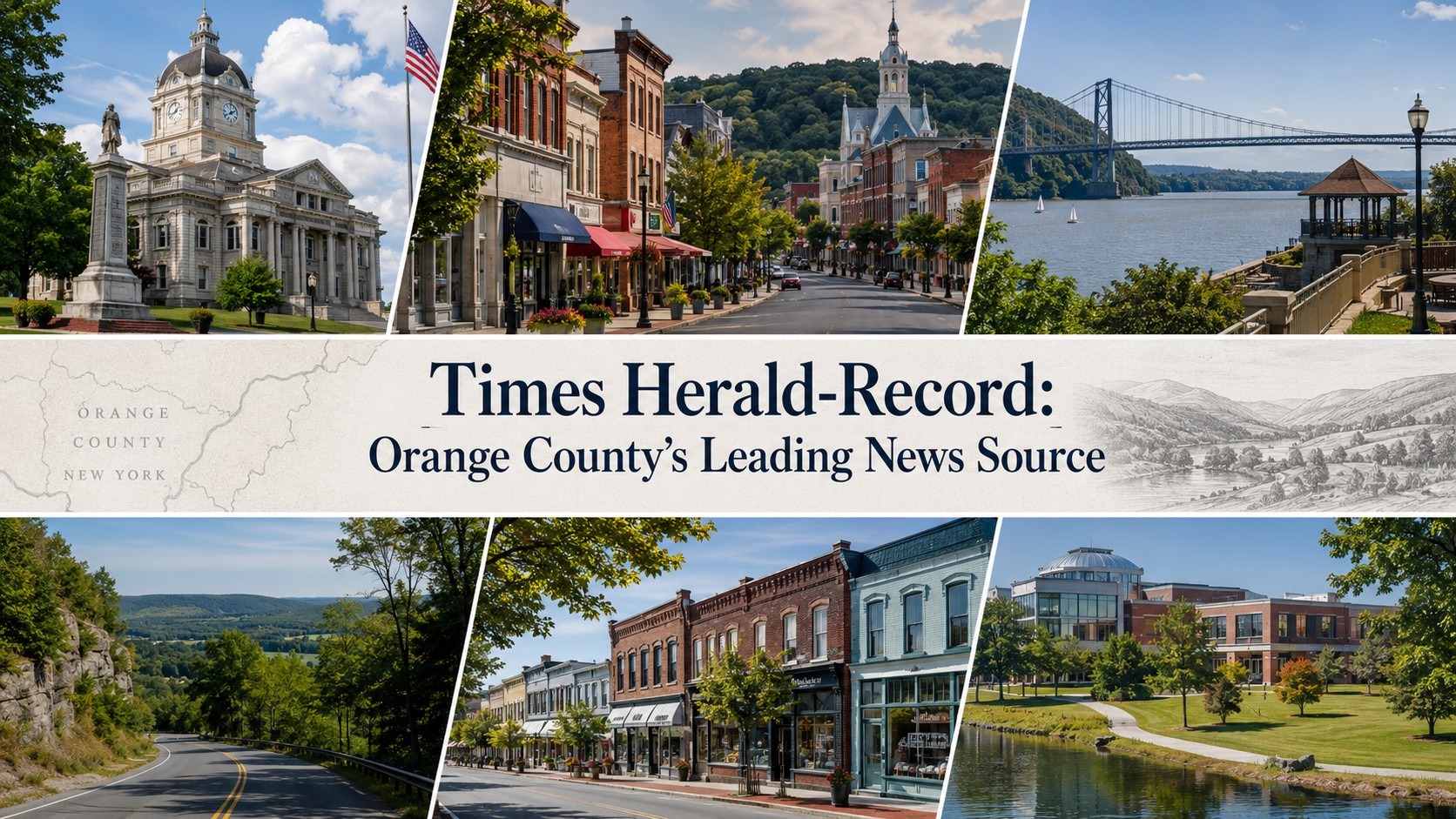

—and that’s why the Times Herald-Record still matters more than its critics admit. Orange County residents don’t need another endless stream of national arguments dressed up as local relevance. They need reporting that explains what happened in Middletown, Newburgh, Goshen, Warwick, Monroe, Port Jervis, and the smaller communities that rarely hold the attention of statewide media.
The Times Herald-Record occupies that practical middle ground. It follows local government, public safety, schools, development, community disputes, high school sports, business changes, and the stories that shape daily life across the Hudson Valley. The publication is also part of the wider USA TODAY Network and remains listed among the company’s New York daily news brands.
That doesn’t make every article essential. It doesn’t mean the paper covers every town with equal depth, either. Local journalism has changed, newsroom resources have tightened, and readers now expect updates at phone speed. Still, judging the Record only by what it no longer is misses what it continues to provide: an organized, searchable record of a region that bigger outlets usually notice only during elections, major crimes, severe weather, or political controversy.
The Short Answer
The Times Herald-Record remains one of Orange County’s most useful general news sources because it combines daily local reporting, regional context, public-interest coverage, sports, community information, and long-running knowledge of the Hudson Valley. It works best as a dependable starting point, not as the only source you read.
Local News Muscle
A local newspaper earns its place through repetition. One major investigation may draw attention, but ordinary coverage builds usefulness: a school budget vote, a road closure, a zoning dispute, a restaurant opening, a high school playoff result, or a change inside county government.
That steady work is where the Record has traditionally been strongest. Its reporting area extends beyond Orange County into neighboring parts of the Hudson Valley, including Sullivan and Ulster counties. That broader reach matters because local issues don’t respect county borders. Commuters travel across them. Hospital systems serve patients across them. Housing pressure in one community affects prices in another.
Orange County itself isn’t one simple news market. Newburgh concerns don’t always resemble Warwick concerns. Middletown readers may be tracking downtown business activity, schools, public safety, and city government, while residents farther south may care more about development pressure, commuting, road capacity, or housing growth.
A regional newsroom can connect those pieces. That’s harder than it sounds.
I’ve noticed readers often judge local news by asking, “Did they cover my town today?” It’s a fair question, but it can hide the larger value. A county government decision made in Goshen may affect taxes, emergency services, infrastructure, or public programs across dozens of communities. A story doesn’t need your ZIP code in the headline to affect your household.
The Record also carries something social media rarely supplies: continuity. A new proposal can be connected to an earlier vote. A court case can be followed beyond the first arrest. A business closure can be placed beside earlier economic changes rather than treated as a surprise that appeared overnight.
That memory is quiet. Readers usually notice it only after it disappears.
Why Orange County Readers Still Check the Record
The strongest reason to read the Times Herald-Record isn’t loyalty to a newspaper brand. It’s efficiency.
You could gather local information from town Facebook groups, government pages, police posts, school alerts, community newsletters, television stations, independent websites, and word of mouth. Some residents do exactly that. The problem is sorting useful information from rumors, repeated claims, missing context, old screenshots, and arguments between people who aren’t working from the same facts.
A newsroom acts as a filter. Not a perfect one. A useful one.
The Times Herald-Record website gives readers one place to scan local headlines, regional developments, sports coverage, opinion, community news, obituaries, and stories connected to the wider USA TODAY Network. The mix changes throughout the news cycle, and access rules may vary by article or subscription status.
Consider a realistic Monday morning. A parent may need to know why buses are delayed. A commuter wants information about a crash affecting a major route. A homeowner is watching a proposed development near an already crowded road. A high school sports family wants weekend results.
Those aren’t glamorous assignments. They’re useful assignments.
And usefulness is where local reporting wins.
I keep seeing people compare a local newspaper’s speed with social media while ignoring accuracy, follow-up, and organization. A neighborhood post may appear first, especially during an emergency. It may also contain the wrong location, an exaggerated claim, or a conclusion made before officials release basic details.
The better habit is simple: use immediate alerts for awareness, then look for reported coverage as verified information becomes available.
The Record’s long relationship with Middletown also gives it recognition that newer outlets must build from scratch. History alone isn’t a quality guarantee (old businesses can lose their way), yet familiarity makes readers more likely to check the site when a story becomes complicated.
Trust is rarely all-or-nothing. It’s built story by story.
What the Coverage Actually Includes
People sometimes describe “local news” as though it were one category. It isn’t. The useful version is a bundle of reporting areas that overlap constantly.
Government reporting explains county decisions, municipal spending, elections, public meetings, taxes, services, and the people holding public authority. Public-safety coverage follows major crimes, court developments, fires, accidents, emergency response, and community concerns. Education reporting tracks school boards, budgets, leadership changes, student issues, and decisions affecting families.
Then come the stories that don’t fit neatly anywhere: new housing, business openings, hospital changes, environmental disputes, road projects, community events, local history, restaurant news, real estate pressure, arts coverage, and the occasional odd story everyone texts to someone else.
Readers looking specifically for Orange County local news should compare coverage across publications rather than expecting one newsroom to catch everything. Different outlets notice different meetings, neighborhoods, institutions, and public concerns.
That isn’t a weakness in the news market. It’s how a healthy local information system should work.
A useful example is a proposed housing project. The story may begin as a planning-board item. Soon, it touches traffic, school enrollment, water capacity, property values, environmental review, local business growth, and political campaigns. Cover only the first meeting and readers receive facts without consequences. Cover only the controversy and they receive emotion without process.
Good local reporting follows the paper trail.
The same applies to elections. Horse-race coverage attracts clicks, but readers usually need simpler information: Who is running? What authority does the office hold? What has the candidate supported before? Which issues can that office actually change?
That final question gets ignored far too often. People blame town officials for county decisions, county officials for state rules, and every elected official for federal problems. The government chart is messy (nobody hangs it on the refrigerator), but local journalism can make responsibility clearer.
When it does, the reader becomes harder to mislead.
The paper’s value is broader than breaking news
Breaking news gets attention because urgency is easy to understand. Something happened. People want details. Reporters gather facts, editors update headlines, and readers refresh the page.
Yet a local publication’s deeper value often appears later.
Obituaries preserve community memory. High school sports coverage gives young athletes and families a public record that national sports media will never provide. Local business stories show how commercial areas are changing. Election archives help readers compare what officials promised with what happened after the campaign signs disappeared.
Even routine articles become historical documents.
Years from now, someone may search for an old school championship, a former restaurant, a local leader, a major storm, or the debate surrounding a development project. The original story becomes part of the community’s memory bank.
That archival role deserves more respect.
The Hudson Valley has also become an increasingly competitive news region. Larger publications have expanded their regional attention, while smaller independent and nonprofit outlets have appeared where residents see gaps in local reporting. One newer nonprofit newsroom launched in 2025 after its founders identified communities receiving less regular coverage amid wider newsroom reductions.
Competition can improve reporting. It can also fragment the audience into small groups that rarely read the same facts.
Then there’s the strange modern habit of treating a neighborhood Facebook argument as public consensus because twelve people posted fifty comments. The loudest thread isn’t always the biggest concern, and an angry reaction icon isn’t a public-opinion survey…but that’s a different article.
The useful question isn’t whether the Record can own every local story. No publication can. The question is whether its reporting adds facts, context, visibility, or accountability that the community would otherwise lose.
Often, it does.
What Most People Get Wrong About Local News Brands
The worst advice is “pick one trusted source and stick with it.”
No. That’s lazy.
A local newspaper should be judged by individual reporting, sourcing, corrections, depth, consistency, and the difference between news and opinion. Brand reputation matters, but it shouldn’t replace active reading.
Some readers make the opposite mistake. They dismiss an entire publication because one headline annoyed them, one columnist expressed an unpopular view, or a story didn’t include the angle they expected. News coverage isn’t the same as editorial opinion, and neither is the same as reader comments.
Mixing those categories creates needless distrust.
Another common complaint sounds like this: “They didn’t report the whole story.”
Sometimes that criticism is accurate. Early reports can be incomplete. Officials may withhold records. People involved may refuse interviews. Court documents may not yet be public. A reporter may also miss context or fail to ask the strongest question.
But readers often use “whole story” to mean “the conclusion I already believe.”
Those aren’t the same thing.
I look for visible sourcing. Does the report identify public documents, agencies, meeting records, court filings, named officials, witnesses, data, or direct responses? Does it distinguish confirmed facts from allegations? Does an update correct or expand the first version?
A story can be accurate without answering every question. It can also be detailed while quietly avoiding the hardest question.
Local reporting faces another unfair expectation: readers want extensive coverage without paying, subscribing, tolerating advertisements, or accepting that journalism costs money. Then they complain that fewer reporters are attending meetings.
The math refuses to cooperate.
Editorial employees connected with the Times Herald-Record, Poughkeepsie Journal, and The Journal News organized as the Hudson Valley News Guild in response to concerns involving staffing, working conditions, local coverage, and newsroom resources. The group remained active in contract negotiations years later.
You don’t need to agree with every criticism of corporate newspaper ownership to understand the pressure. Fewer reporters usually mean more choices about what doesn’t get covered.
And those choices leave marks.
A Better Reading Routine
Constantly refreshing local news is unnecessary for most people. Ignoring it for weeks isn’t ideal, either. A small routine works better because it keeps you informed without turning every phone alert into a demand for attention.
Here is the only checklist you need:
- Scan the main local headlines once each morning. Spend two or three minutes looking for stories affecting your town, workplace, commute, school district, taxes, safety, or major services.
- Open the original report before reacting to a screenshot. Headlines travel without context. Read enough to identify what is confirmed, what remains unclear, and when the story was updated.
- Check public sources for direct details. School closures, meeting agendas, election information, emergency notices, and government documents may be clearer on the responsible agency’s official page.
- Compare coverage when the issue is disputed. Read another local outlet, a regional publication, or primary documents. Different reports may contain separate interviews rather than conflicting facts.
- Return to major stories after the first news cycle. Arrests, lawsuits, investigations, government proposals, and development disputes often change after additional records become available.
That routine takes less time than arguing beneath a headline you haven’t opened.
A development story offers a good example. The first report may announce a proposal. The next may explain opposition. Later coverage may include environmental review, planning-board conditions, revised plans, lawsuits, approval, rejection, or construction delays.
Readers who stop after the first article leave with an outdated version of reality.
The same problem appears in crime coverage. An arrest is not a conviction. An accusation is not a final court finding. Early police information may change as evidence is reviewed. Responsible readers should watch the case beyond the dramatic first headline.
Look, local news works best when you treat it as an ongoing record rather than a collection of isolated posts.
I’ve noticed the most informed readers aren’t necessarily the people consuming the highest number of stories. They’re the ones who return to difficult stories after public attention moves elsewhere.
That’s where accountability reporting earns its keep.
The Cost of Staying Informed
Subscriptions create an awkward conversation because readers compare the price of journalism with free information rather than with the cost of producing reporting.
A Facebook post can be free because nobody was paid to attend a three-hour public meeting, request records, interview several people, verify claims, write a clear report, edit it, publish corrections, and follow the issue for six months.
That doesn’t mean every subscription is automatically worth buying.
Digital pricing, introductory offers, renewal costs, print options, and access packages can change. Readers should check the current terms rather than relying on an old promotion or a price quoted by someone online. The real question is how often you use the coverage.
Someone who reads several Orange County stories each week, follows local government, tracks school news, reads high school sports, and uses the archives may see clear value. A person opening one article every two months may not.
Print adds another trade-off.
Some readers prefer a physical edition because it encourages slower reading and exposes them to stories they wouldn’t select online. Others care more about speed, searchable archives, mobile access, and updates. Neither preference makes someone better informed by default.
The format matters less than the reading habit.
Corporate ownership also affects how some readers judge value. The Times Herald-Record is included among USA TODAY Co.’s local brands, connecting it to a large national publishing network. That relationship can provide shared technology, national content, and broader distribution. It may also create concern about regionalization, staffing decisions, repeated network material, or reduced attention to smaller communities.
Both views can be true at once.
A network can give a publication resources that a tiny independent outlet lacks. A smaller newsroom can still struggle to cover a large territory with the detail readers expect.
Honestly, that tension defines much of modern local journalism.
How Does the Times Herald-Record Compare With Other Local Sources?
No single publication wins every category. The Record’s advantage is breadth, familiarity, regional reach, and the ability to combine Orange County reporting with wider Hudson Valley and network content. Its disadvantage is the same scale: readers may sometimes want more town-by-town detail than a regional daily can consistently provide.
The smartest comparison focuses on purpose.
| News source | Usually strongest for | Common limitation | Best way to use it |
|---|---|---|---|
| Times Herald-Record | Regional reporting, major local stories, public affairs, sports, community coverage, searchable news | Coverage depth may vary by town and topic | Use as a daily regional starting point |
| Town or county government pages | Meeting notices, agendas, official documents, service updates | Information comes from the institution being covered | Verify dates, records, rules, and direct announcements |
| Local television news | Fast updates, weather, traffic, video, major breaking events | Short reports may leave limited room for local detail | Follow urgent events, then seek deeper reporting |
| Independent local publications | Focused community reporting and overlooked local issues | Smaller teams may publish less frequently | Add neighborhood detail and alternative reporting |
| Community social media groups | Immediate observations, local tips, public reaction | Rumors, missing context, old information, weak verification | Use as a lead, never automatic proof |
The table reveals something readers often miss: these sources aren’t interchangeable.
A government page can tell you when a hearing will occur. It may not investigate whether officials handled the issue well. A neighborhood group may reveal a problem before reporters hear about it. It may not identify the correct agency or confirm the cause. A television report may show a breaking event quickly. It may not follow a zoning dispute for six months.
The Times Herald-Record is strongest when it connects events to institutions and consequences.
Imagine a severe storm affecting several Orange County communities. Social media may show flooded roads first. Municipal pages may announce closures. Television may provide weather radar and live video. A regional newspaper can gather impacts across towns, explain official response, report damage, update transportation information, and follow recovery after the storm moves away.
No source needs to lose for that system to work.
I’m more skeptical of comparisons based entirely on article volume. Publishing more stories doesn’t automatically mean producing more local knowledge. Ten rewritten announcements may contain less public value than one careful report explaining how a county decision affects taxes or services.
Count usefulness, not headlines.
The Strengths Are Real, but So Are the Gaps
The Record’s biggest strength is that it still gives Orange County a recognizable daily news center.
You know where to look when a major local story develops. You can search older coverage, follow regional issues, read about nearby counties, check sports, review community news, and see how a local event fits into a wider network.
That consistency has value.
Its weak points are familiar across much of regional journalism. A large coverage area creates uneven attention. Smaller towns can disappear from the headline mix unless something unusual happens. Busy news cycles push slow government stories aside. Network articles may compete with local reporting for space and visibility.
Readers also notice staffing limits.
Regional journalists have publicly argued that years of reductions affected the ability of Hudson Valley newsrooms to cover ordinary community issues with the depth residents want. Those concerns helped drive organizing efforts among editorial employees.
Pretending those pressures don’t exist would make this review useless.
Still, newsroom limits shouldn’t become an excuse for dismissing the reporting that remains. The fair response is to judge the work, support valuable local coverage, point out missing communities, submit credible tips, request corrections when facts are wrong, and read more than one source.
The paper’s official support system also provides a route for questions, story information, account concerns, and other reader contact. A newsroom can’t cover a problem it never hears about, though sending a tip doesn’t guarantee a story.
And no, posting “Why isn’t the media covering this?” beneath an unverified screenshot isn’t the same as contacting a reporter with documents, names, dates, and a clear explanation.
Useful tips are specific.
The future of Orange County news probably won’t belong to one dominant outlet. It will involve regional newspapers, independent publishers, nonprofit newsrooms, public records, newsletters, broadcasters, and informed residents sharing credible information.
The Record remains a major piece of that mix.
Frequently Asked Questions
Is the Times Herald-Record a reliable source for Orange County news?
Yes, it is a useful established source for local reporting, regional developments, government, public safety, sports, and community information. Reliability should still be judged story by story. Check sourcing, distinguish reporting from opinion, and compare disputed topics with public documents or another credible outlet.
Can I read every Record Online article without a subscription?
No, access can differ by article and may depend on current subscription rules, promotional access, or account status. Some material may be openly available while other reporting requires payment. Check the publication’s current offer because digital packages and introductory terms can change.
How often should I check Orange County local news?
2 or 3 brief checks during the week may be enough for general awareness, with more frequent reading during emergencies, elections, major government debates, severe weather, or fast-moving community events. A short daily headline scan is usually more useful than hours of random scrolling.
Does the Times Herald-Record cover only Middletown?
Coverage extends beyond Middletown and includes Orange County communities as well as regional stories connected to neighboring Hudson Valley areas. The amount of reporting devoted to each town can change with the news cycle, public impact, available staffing, and the significance of current events.
Is a print subscription still worth paying for?
Honestly, it depends. Print can be worthwhile for readers who enjoy a complete edition, slower reading, local sports, community information, and discovering stories outside their usual interests. Digital access is generally better for fast updates, searching older reports, and reading across devices.
How is the Record different from local Facebook groups?
Social media groups are faster at sharing observations, but speed doesn’t guarantee accuracy. The Record applies reporting, sourcing, editing, and follow-up to selected stories. Community groups remain useful for tips and immediate discussion, yet unverified posts shouldn’t be treated as confirmed news.
Can residents send story ideas to the Times Herald-Record?
Readers can contact the publication with information about community issues, public concerns, events, and possible stories. A strong tip includes specific names, dates, documents, locations, public impact, and a reliable way to verify the claim. Clear evidence receives more attention than a vague accusation.
A Practical Verdict
Orange County doesn’t need readers to treat any newspaper as flawless. It needs people who value verified local information enough to read carefully, compare sources, follow stories beyond the first headline, and support reporting that holds public institutions accountable.
The Times Herald-Record remains one of the region’s leading general news sources because it offers reach, continuity, recognizable local coverage, and a public record larger platforms rarely provide. Its gaps are real, especially when limited newsroom resources meet a broad and demanding coverage area.
Your next step is simple: open the local page today, choose one story affecting your community, and follow that issue through its next update rather than forgetting it after the first headline.
Local knowledge grows through attention.