
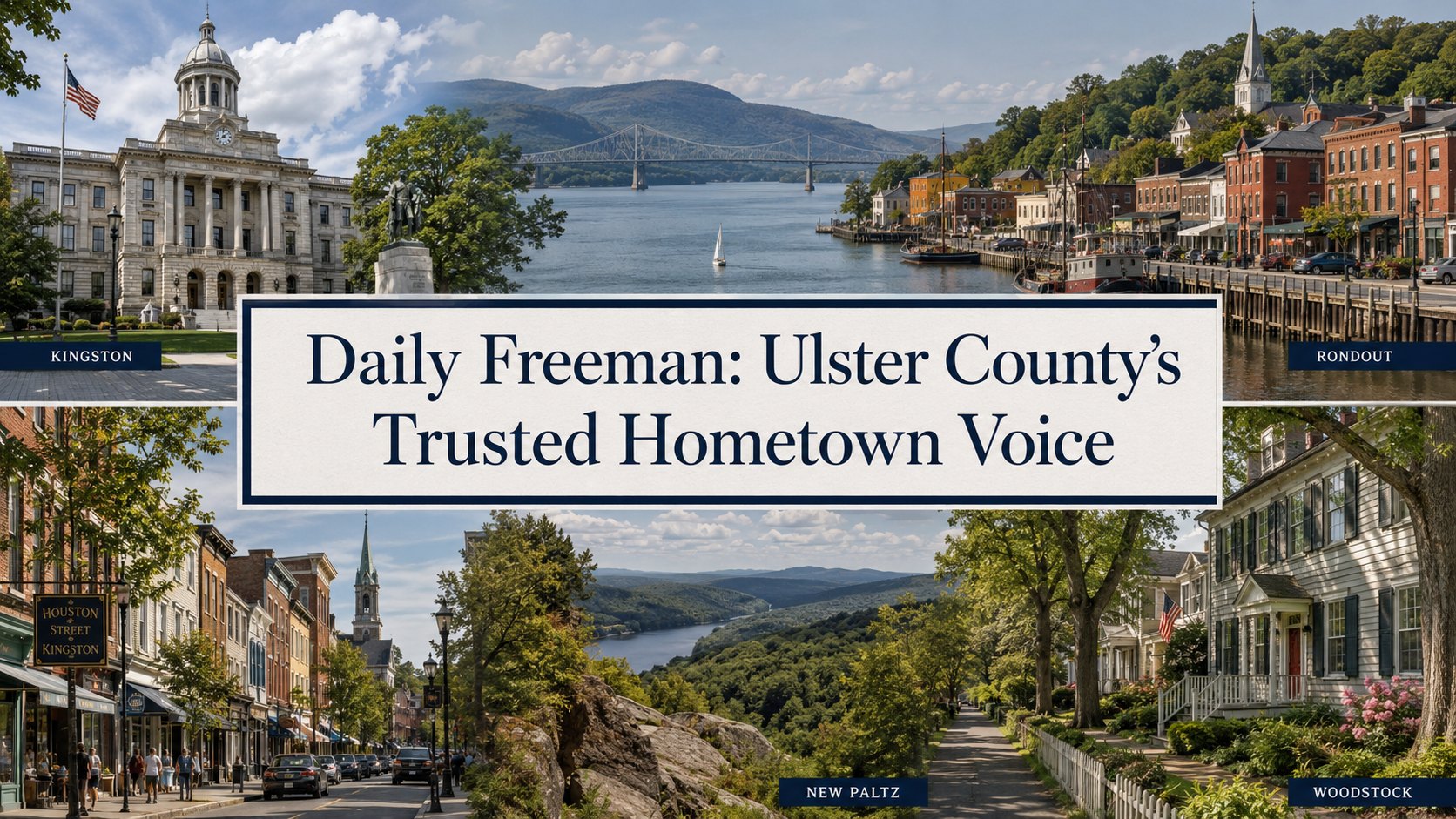

A local paper isn’t valuable because it tries to outshout national media; it matters because it keeps watch on the decisions, disputes, people, and institutions that shape ordinary life close to home. The Daily Freeman has long filled that role for readers in Kingston, Ulster County, and the wider Mid-Hudson area.
Its strongest work is often the least flashy: a city meeting that changes a neighborhood, a school issue parents need to understand, a court case with local consequences, a business opening, a high school result, or an obituary that records a life in more than a line. That mix gives a hometown publication its staying power.
Still, trust shouldn’t mean automatic loyalty. Readers should judge any news source by how consistently it reports, how clearly it separates news from opinion, how well it corrects errors, and whether its local coverage reaches beyond the loudest communities. The useful question isn’t “Is this paper perfect?” It’s “Does it help you understand Ulster County better than you would without it?”
The Short Answer
The Daily Freeman remains a useful hometown news source because it focuses on the public decisions, local institutions, community events, sports, people, and breaking stories that larger outlets often miss. Its value is greatest when you read it regularly, compare major stories with other sources, and use its reporting as a starting point for staying involved locally.
Local Reporting Endures
A county is too large to understand through social media posts and too local to receive steady attention from national newsrooms. That gap is where a hometown paper earns its keep. Ulster County includes a city, small towns, villages, rural roads, business districts, school communities, arts organizations, farms, public agencies, and a lot of political argument. Those worlds overlap, but they don’t always hear one another.
Local reporting creates a common record. You may not attend a Kingston Common Council meeting, sit through a county committee session, follow every school board agenda, or read every planning document. A newsroom can do some of that work, ask questions, and turn the result into a report you can understand before breakfast or during a lunch break (which is how most people actually consume local news now).
Consider a school budget vote. The final number may appear in a short election-night update, but the useful reporting began weeks earlier with proposed spending, staffing changes, tax implications, public comments, and board decisions. Without that sequence, readers see an outcome without understanding the choices behind it. The same is true of a town road project or a county contract. The headline is only the visible edge.
That sounds basic. It isn’t.
I’ve noticed that readers often say they want “more positive news,” but the stories they depend on most are usually accountability stories: taxes, road work, housing, public safety, development, school spending, court cases, and changes in local services. Good community coverage has room for celebrations, profiles, and event previews, yet it can’t become a civic bulletin board. A paper that only praises the community eventually stops serving it.
The Daily Freeman’s long presence also gives it something newer outlets have to build slowly: accumulated context. The historic Kingston Daily Freeman became a major regional publication in the late nineteenth century and remained a central source of Ulster County reporting through the twentieth century. That history doesn’t guarantee strong work today, but it explains why the name still carries weight with readers who have seen local institutions change over decades.
By the time a debate returns, the old meeting minutes are usually buried and half the town remembers a different version.
The Daily Freeman’s place in Ulster County
The paper’s identity starts in Kingston, but its usefulness doesn’t stop at the city line. Readers look to it for Ulster County government, town issues, courts, police and fire news, schools, business, local sports, arts, community events, and major developments across the area. The exact mix changes with the news cycle, which is normal. A courthouse week looks different from a budget season, a storm response, or a close local election.
You can see that range by visiting the Daily Freeman website, where breaking stories sit beside ongoing local coverage, sports, opinion, features, and other community material. The site is most useful when you treat it as a daily local desk rather than a magazine you check once a month. Small updates accumulate. A zoning dispute that seems dull in April can become the biggest neighborhood story by September.
The real reader isn’t only the person who follows politics closely. It’s also the parent trying to understand a district decision, the homeowner watching a proposed project, the commuter checking a road closure, the small-business owner tracking downtown changes, or the former resident who still wants a reliable connection to home.
Look, no single outlet can cover every hamlet, board, nonprofit, team, and cultural event with equal depth. Expectations need to be realistic. But readers are right to expect a local paper to make choices based on public value, not only on which story is easiest to publish or most likely to spark angry comments.
One pattern stands out after comparing local outlets for years: the strongest stories often begin with a narrow question and reveal a wider issue. A dispute over one building may expose a housing rule. A school appointment may show a staffing problem. A road project may reveal how state, county, and town responsibilities collide. Without that connective work, readers get six headlines and no map (a distinction that gets lost when headlines travel alone).
The paper’s real strength is civic memory
Breaking news gets attention because it’s immediate. Civic memory earns trust because it helps readers understand what came before. A hometown paper records who proposed a project, what officials promised, how residents responded, which deadlines slipped, and what the final result cost the community in time, money, or patience.
That record can be especially useful in Ulster County, where development, housing, tourism, environmental protection, infrastructure, and affordability often pull in different directions. A new project may promise jobs or tax revenue while raising questions about traffic, water, neighborhood character, or rent pressure. Readers need more than the announcement. They need follow-up.
This is where popular advice about “reading local news” often falls short. People are told to scan the homepage, read a few headlines, and feel informed. That’s not enough. Local understanding comes from following the same subject over time. The first story tells you what someone wants to do. The later stories tell you who objected, what changed, whether approvals were granted, and whether the promised outcome appeared (or quietly vanished from the agenda).
A realistic example is a housing proposal that begins with a press release and a rendering. The next reports may involve zoning questions, traffic concerns, affordable-unit requirements, environmental review, revised plans, public hearings, and a final vote. Months later, financing or litigation may change the timeline again. Readers who saw only the launch announcement would have an entirely different picture from readers who followed the file through each turn.
I’ve seen readers become frustrated because a report doesn’t repeat every detail from six earlier stories. The frustration is understandable, but it points to a useful habit: search the outlet for earlier coverage. Local news is often serialized by reality. Government moves slowly, lawsuits stretch out, construction gets delayed, and public debates circle back.
Obituaries and community profiles belong in this idea of memory too. They preserve names, families, service, work, and local connections that may never appear in a statewide publication. Sports archives do something similar for students and schools. A championship score is news for a day; years later, it’s part of a family story.
And then there are the odd local controversies everyone remembers long after the official issue has faded. Kingston’s public life has produced its share of disputes over streets, signs, buildings, art, parking, and preservation. These stories can look small from outside the county. Inside the community, they become shorthand for bigger arguments about identity and change.
Years later, someone searching a name, address, team, or old argument may find the whole dispute waiting.
More Than Kingston
Kingston naturally receives a large share of attention because it is Ulster County’s only city and a center of government, courts, business, culture, and public activity. Yet readers outside the city have a fair complaint when local coverage feels too Kingston-heavy. Saugerties, New Paltz, Rosendale, Hurley, Marbletown, Gardiner, Shawangunk, Woodstock, Wawarsing, Lloyd, Esopus, Plattekill, Denning, Hardenburgh, and other communities have their own public questions and distinct rhythms.
The best county reporting moves between those places without treating smaller towns as occasional scenery. A planning decision in one town can signal pressure that soon reaches another. A school issue can cross district boundaries. A major employer, road closure, emergency response, or environmental concern may affect residents far beyond the municipality named in the headline.
For broader context, readers can also follow Ulster County local news coverage that gathers stories around the county and helps connect individual developments. No outlet should be your only window, especially when a story is disputed or moving quickly (and local Facebook arguments are already running ahead of verified facts).
There’s a side conversation here about how Hudson Valley identity changes from town to town, and why some residents resist being grouped under one regional label. It gets into tourism, migration, old county loyalties, real estate language, and who gets to define “local” …but that’s a different article.
The practical point is simpler. A town that appears only after a fire, arrest, or political fight will not feel covered. It will feel visited.
What most people get wrong about local news
The worst advice is to judge a local paper by one story you disliked. Honestly, that standard is lazy. A news outlet should be evaluated across time: accuracy, sourcing, follow-up, range, corrections, headline quality, and the difference between reported news and opinion. One weak article matters, but it doesn’t tell you everything. One excellent article doesn’t either.
Another mistake is assuming that a story is biased because it includes a view you dislike. Reporting should be fair, specific, and supported. Fairness doesn’t require every claim to receive equal weight. If one side provides documents and the other offers only a denial, the article shouldn’t pretend those are identical forms of evidence.
And people confuse incompleteness with dishonesty. Early breaking news is often incomplete because facts are still being confirmed. The better question is whether the outlet updates the story, labels uncertainty, and corrects errors openly. Speed is useful. False certainty isn’t (especially during emergencies, when one bad detail can race across town in minutes).
I’ve noticed a second contradiction in reader complaints. People criticize local sites for publishing crime, conflict, and government disputes, then complain that they didn’t know about a public hearing, a tax change, or a major arrest. Newsrooms can improve balance, but readers also have to move beyond the stories that algorithms push hardest. The angriest headline is not always the most consequential one.
Paywalls draw similar frustration. Nobody enjoys being blocked in the middle of a story. But the idea that local reporting should be unlimited, immediate, professionally produced, and free forever doesn’t survive contact with payroll, insurance, technology, photography, editing, public-record costs, and time. Advertising alone has not replaced the old newspaper business model in a clean or stable way.
That doesn’t mean every subscription price is a bargain or every digital experience is pleasant. It means the debate should be honest. You’re not paying for pixels. You’re paying for people to keep asking local questions when the meeting is dull, the records are messy, and the answer may annoy someone powerful.
Reading it well takes a little effort
A hometown paper works best when you use it with intention. Opening the site only after a major fire, election, scandal, or storm gives you fragments without the background that makes them useful. A light daily habit is more effective, and it doesn’t require hours.
Here’s a practical way to read local coverage without getting buried:
- Scan the local headlines first. Look for government, schools, courts, public safety, housing, development, roads, and major community institutions before drifting toward the most emotional story.
- Open one story outside your immediate town. County decisions and neighboring communities often affect taxes, traffic, services, jobs, or regional planning in ways that aren’t obvious at first.
- Check the date and update time. Breaking stories can change quickly, while older articles may keep circulating on social media without context.
- Separate news, analysis, letters, and editorials. They serve different purposes. An opinion page isn’t proof that every news report carries the same viewpoint.
- Follow one continuing issue for a month. Search earlier coverage, note the key officials or agencies involved, and watch whether promises, votes, and deadlines match.
- Compare disputed stories. Read another credible local source, inspect public documents when available, and notice which facts both reports share.
- Support the work you use. That may mean subscribing, sharing accurate reporting, sending a useful tip, or correcting misinformation with a direct article rather than a screenshot.
The fifth step changes how you see local news. A single meeting story can feel procedural. Four connected stories reveal the stakes (and expose which officials keep changing their explanation).
One small warning: don’t confuse reading comments with reading the community. Comment sections and social feeds attract strong opinions, repeat participants, and people reacting before opening the article. They can reveal questions worth asking, but they are not a scientific sample of Ulster County.
Daily Freeman compared with other local news choices
No serious reader needs to choose one outlet and reject all others. Different local sources do different jobs well. A daily newspaper may offer steady breaking coverage and institutional reporting. A nonprofit or independent outlet may spend more time on a narrow investigation. Radio can provide immediacy and interviews. Television brings visuals. Government pages provide primary documents but rarely independent scrutiny.
The useful comparison is not “Which source wins?” It’s “Which source answers this question best, and what might it miss?”
| Source type | Strongest use | Common limitation | Best reading habit |
|---|---|---|---|
| Daily Freeman | Frequent local updates, public affairs, breaking news, sports, community record | Coverage depth can vary by topic and staffing | Read regularly and search earlier stories |
| Independent local outlets | Focused reporting, analysis, neighborhood detail | Publication schedules may be less frequent | Use for context and alternate framing |
| Regional newspapers | Cross-county trends, larger investigations, state connections | Smaller Ulster County issues may receive less attention | Read when a local story has regional stakes |
| Local radio and television | Fast updates, interviews, weather, live information | Short formats can limit detail | Pair broadcasts with written reporting |
| Government websites | Agendas, minutes, budgets, laws, notices, direct documents | Information comes from the institution being covered | Verify dates and read the underlying records |
| Social media groups | Immediate eyewitness chatter and community questions | Rumors, missing context, recycled posts | Treat claims as leads, not proof |
This is also where the Daily Freeman’s age can be both a strength and a burden. A long-established paper has recognition, archives, routines, sources, and readers who expect it to show up. It also carries old expectations about print, delivery, pricing, staffing, and what a “daily paper” should look like. Those expectations don’t always fit the economics or habits of online news (but they remain emotionally powerful).
Think about a fast-moving storm or major road closure. Radio may deliver the first practical warning. A government account may post the official notice. Residents may share photos. The newspaper’s job is different: confirm what happened, identify the affected area, explain the response, update conditions, and preserve a report that can still be found after the social feed moves on. The strongest local information systems overlap rather than compete for one winner.
I tend to trust an outlet more when it shows its work: named sources where possible, direct documents, clear attribution, precise locations, and updates that explain what changed. I trust it less when headlines stretch beyond the reporting or when a complicated dispute is flattened into a simple fight.
Readers can make the whole local news system stronger by using more than one source without turning every difference into a conspiracy. Two reporters can attend the same meeting and lead with different facts because they’re serving different audiences or judging the significance differently. The disagreement between two accurate stories may be the part worth reading twice.
What does a subscription really buy?
A subscription buys access, but the deeper purchase is continuity. You’re helping fund the routine work that rarely goes viral: checking court calendars, calling officials, attending public meetings, photographing local events, editing copy, updating breaking stories, maintaining archives, and keeping a public record available after social posts disappear.
The trade is not purely civic. You should expect a usable product in return. The site should load reasonably, account access should work, billing terms should be understandable, and cancellation or customer service shouldn’t feel like a scavenger hunt. Digital news companies sometimes underestimate how quickly a clumsy subscription experience can damage trust built by the newsroom.
Pricing and offers can change, so readers should check current terms rather than rely on an old promotion or a neighbor’s bill. Introductory rates may differ from renewal rates. Print and digital packages may have different delivery rules. The exact details matter more than the headline price (fine print has ended more than one happy subscription).
Honestly, the right value depends on how often you read. Someone who opens several local stories each week, follows government, checks sports, and uses the archive may get clear value. Someone who reads one article every two months may not. Still, the second reader benefits indirectly from having reporters in the community when a major story breaks.
A realistic scenario helps. Suppose a proposed development near your neighborhood moves through planning review over six months. You may read an initial announcement, a public-hearing report, a revision, a vote, and a follow-up on litigation or construction. The value isn’t any single article. It’s the chain.
I’ve also noticed that readers are more willing to pay when they can see local fingerprints on the work: familiar places, direct questions, original photos, named documents, and reporting that couldn’t have been produced by rewriting a press release from somewhere else.
The trade-offs nobody should ignore
Calling a paper a trusted hometown voice shouldn’t turn into nostalgia. Local newspapers face real limits, and readers can feel them. Staffing reductions can mean fewer routine meetings covered, less time for long investigations, more reliance on shared regional material, and uneven attention across towns. A thin newsroom can still produce strong journalism, but effort doesn’t create extra hours in the day.
Ownership matters too, though readers sometimes discuss it in overly simple terms. Large newspaper groups can provide technology, legal support, advertising systems, and shared resources. They can also create pressure to cut costs, standardize products, or centralize work far from the community. MediaNews Group, the broader company associated with the Daily Freeman, has been part of national debates about consolidation and newsroom cuts. The fair test is what readers can observe locally: reporting volume, staffing, depth, responsiveness, and the range of communities covered.
Another downside is repetition. Daily news sites often publish incremental updates, related photo galleries, briefs, and stories built around official announcements. Some of that is useful. Too much can make the homepage feel busy without making readers better informed. Editors have to balance speed with distinct value.
Then there’s tone. Crime and conflict generate attention, but a county cannot be understood only through arrests, fires, political fights, and tragedy. Strong local coverage also follows schools when there isn’t a crisis, explains public budgets before the vote, covers local business beyond openings, and treats arts reporting as more than event promotion.
Sports coverage deserves the same seriousness. A high school game story is not national news, yet it can be deeply valuable to students, families, coaches, alumni, and communities that rarely see their achievements recorded elsewhere. The downside is obvious: limited staff means not every team or season receives equal space. Readers notice those gaps quickly (parents keep receipts, figuratively and sometimes literally).
No outlet gets that balance right every day.
The reader’s responsibility is to criticize specifically. “This paper is biased” tells an editor almost nothing. “This story omitted the planning document, used an inaccurate headline, and didn’t seek comment from the affected neighborhood group” is a real complaint. Specific criticism can improve journalism. Blanket contempt mostly rewards people who want local reporting weakened.
And yes, sometimes the paper will publish something you think is dull. That may be the meeting where your tax bill, water system, library, school policy, or road project quietly changed.
Frequently Asked Questions
Is the Daily Freeman mainly a Kingston newspaper?
Yes, Kingston is central to its identity and coverage, but the paper also reports on Ulster County and the wider Mid-Hudson region. The balance varies with staffing and the news cycle. Readers outside Kingston should judge it by how consistently their towns and countywide institutions appear over time.
Does the Daily Freeman cover all of Ulster County?
No, not every town, meeting, school event, or community issue receives equal attention. No local newsroom has unlimited staff. Coverage is strongest when editors hear from readers, officials provide access, and reporters can identify a clear public impact beyond a single announcement.
How often should I check local news?
3 to 5 brief checks each week are enough for many readers, especially if you follow continuing issues rather than scrolling endlessly. During storms, elections, major court cases, emergencies, or fast-moving public debates, checking more often can help you catch updates and corrections.
Is a Daily Freeman subscription worth paying for?
Honestly, it depends. Frequent readers who follow government, schools, local sports, courts, business, or community changes are more likely to see direct value. Occasional readers may hesitate, but subscriptions also help support reporting that remains available when a major local story suddenly affects them.
Can I rely on one local newspaper for the full story?
Usually, you shouldn’t. Start with the reported facts, then compare another credible outlet on disputed or high-impact stories. Check public agendas, court documents, budgets, or official notices when they are available. Multiple sources don’t automatically mean one is lying; they may emphasize different parts.
Why do some Daily Freeman stories have a paywall?
Paywalls help fund reporting, editing, photography, technology, and the routine work behind local coverage. The popular idea that online news costs almost nothing to produce is mistaken. Distribution is cheaper than printing, but original reporting still requires paid people, time, access, and institutional support.
Does the Daily Freeman publish opinion as well as news?
The paper includes opinion material, and readers should distinguish editorials, columns, and letters from reported news. Those formats are supposed to express arguments or viewpoints. A strong reading habit is to check the label, the author, the evidence offered, and whether the piece is reporting facts or making a case.
What should I do if I think a local story is wrong?
Contact the newsroom with the exact sentence, fact, date, name, or document you believe is incorrect. Provide evidence rather than a general accusation. Responsible outlets should review credible correction requests and update material when warranted. Public criticism is fair, but precision gives it a chance to work.
A hometown voice still has to earn trust
Trust is not a lifetime award. It is renewed story by story, correction by correction, and follow-up by follow-up. The Daily Freeman remains valuable because Ulster County still needs reporters watching local government, courts, schools, public safety, sports, business, culture, and the small decisions that become large ones later.
Your next step is simple: choose one local issue you care about today, read the newest report, then search for the earliest story on the same subject. That comparison will show you what changed, who kept a promise, and which questions remain unanswered.
A hometown paper is strongest when readers don’t merely consume it. They question it, support it, correct it, and use it to pay closer attention. That daily exchange is what keeps a local voice alive.