
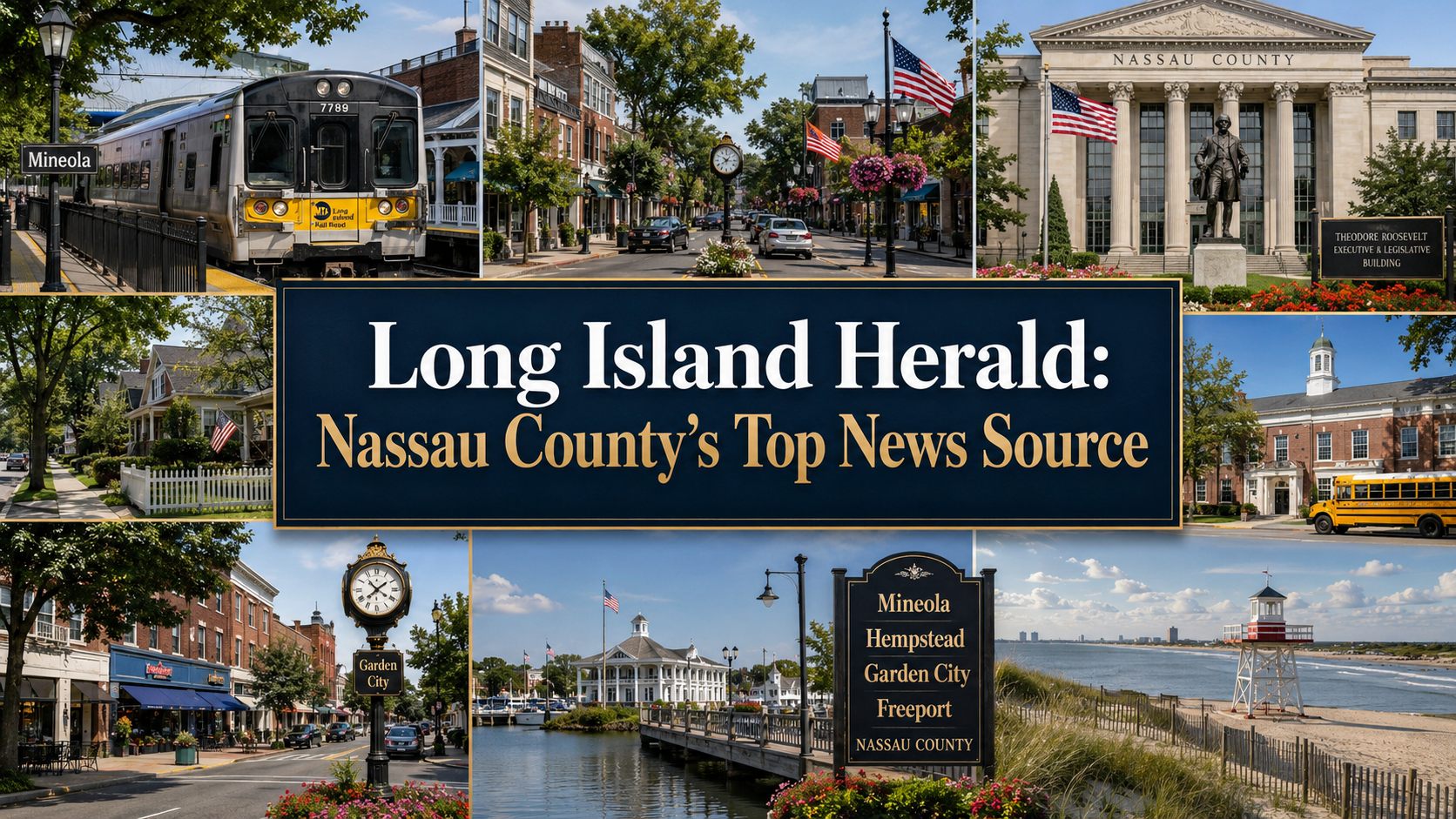

Nassau coverage is only useful when it gets small things right.
That’s the real test for the Long Island Herald. Big regional outlets can chase countywide politics, crime, storms, taxes, and whatever story is loud enough to cross town lines. But Nassau County is made of villages, school districts, civic groups, fire departments, zoning fights, youth sports, library boards, and neighborhood arguments that never look “big” until they affect your block.
The Long Island Herald sits in that space. For readers who want Nassau County news without feeling like their town got folded into a vague Long Island headline, it’s one of the outlets worth checking first. It isn’t perfect. No local paper is. But its strength is clear: it treats hyperlocal updates as news, not filler.
That matters if you live in, work in, commute through, or follow Nassau. A county can feel close-knit and scattered at the same time. The Herald helps close the gap by giving readers a more local view than broad regional coverage usually offers.
The Short Answer
The Long Island Herald is a strong Nassau County news source because it focuses on hyperlocal reporting: schools, village issues, community events, local government, public safety, people, and neighborhood concerns. It works best as a practical daily or weekly check-in, especially when paired with broader regional sources for countywide context.
What Makes the Herald Useful for Nassau Readers?
The Herald’s value starts with scale. Nassau County is not one place, even though outsiders often talk about it that way. Rockville Centre is not Hempstead. Long Beach is not Garden City. The Five Towns don’t read like East Meadow, and Oyster Bay conversations don’t always match what people in Freeport are worried about.
That’s why a publication like the Long Island Herald has a lane. It isn’t built only around the biggest countywide story of the day. It’s built around the idea that local government meetings, school board decisions, charity drives, small business openings, police updates, awards, and civic disputes all shape how people understand home.
A lot of readers don’t realize how much local news they miss until something directly affects them. A road closure. A budget vote. A school policy change. A zoning hearing. A local official leaving office. Then suddenly the “small” outlet becomes the one place that bothered to write the story in plain language.
That’s the pattern I’ve noticed with community news: people say they want hard-hitting investigations, but what they use most often is practical, close-to-home information. They want to know what changed, who decided it, and whether it affects their street, school, commute, taxes, or kid’s Saturday schedule.
The Herald’s advantage is that it doesn’t need every story to feel dramatic. A quieter story about a local nonprofit, village meeting, school event, or neighborhood dispute may be exactly what a Nassau reader came looking for.
And yes, that sounds simple. It isn’t.
Local reporting takes patience because the audience already knows the place. You can’t fake familiarity for long. If a story mixes up a school district, ignores a village boundary, or treats one Nassau community like another, readers notice fast. That’s where hyperlocal outlets either earn trust or lose it.
Nassau News Works Best When It Gets Specific
Nassau County readers don’t usually search for “Long Island news” because they want a broad lecture. They search because something happened near them. They want names, places, meeting dates, official actions, neighborhood context, and enough background to understand why the issue matters.
This is where the Herald’s local structure helps. Instead of forcing every item into a countywide frame, it can let a story stay local. That’s not a weakness. It’s the whole point.
A school board story in Oceanside may not matter much to someone in Glen Cove. But for the families inside that district, it may matter more than a statewide political fight. A village election in the Five Towns may seem narrow to a regional editor. For residents, it can shape parking, policing, development, services, and basic quality of life.
The same goes for community events. Bigger outlets often treat parades, fundraisers, library programs, local sports, retirements, and school honors as soft coverage. Some of it is soft. Fine. But soft doesn’t mean useless. These stories create a public record of community life, and that record matters more than people admit.
Look at the difference between “Nassau officials discuss infrastructure” and “your village board is reviewing a project near a road you use every morning.” One is information. The other is usable.
The Herald’s best work fits that second category.
There’s a funny tension here. Readers complain about local papers covering “small stuff,” then complain louder when nobody covers the small stuff. That isn’t hypocrisy as much as proof that local news has two jobs at once. It has to watch power, and it has to notice community life. Most outlets are better at one than the other.
The Herald’s strongest lane is the community-facing side: town-level updates, people, schools, local institutions, and Nassau-specific concerns that can vanish inside larger media coverage.
Where the Long Island Herald Fits Among Nassau County News Sources
No single outlet should be your only source for Nassau County. That’s not a knock on the Herald. It’s how media works now. Different outlets have different strengths, and smart readers use them for different jobs.
Here’s the cleaner way to think about it:
| Source type | Best for | Weak spot | How Nassau readers should use it |
|---|---|---|---|
| Hyperlocal outlets like the Herald | Village news, schools, civic life, local events, people, neighborhood updates | May not always offer the widest regional context | Check for close-to-home stories and community detail |
| Regional Long Island outlets | Countywide politics, major crime, transportation, business, investigations | Smaller neighborhood stories may get skipped | Use for bigger Nassau and Suffolk context |
| TV news | Breaking incidents, weather, visuals, live updates | Short segments can miss background | Use for urgent stories, then verify details later |
| Government websites | Official notices, agendas, documents, public statements | Hard to read, sometimes slow to explain impact | Use to confirm dates, meetings, and formal decisions |
| Social media groups | Fast neighborhood chatter | Rumor-heavy, uneven, emotional | Treat as a tip sheet, not confirmed reporting |
This comparison matters because readers often judge the wrong source by the wrong standard. A weekly or hyperlocal outlet shouldn’t be expected to behave like a 24-hour TV station. A regional paper shouldn’t be expected to cover every school fundraiser. A Facebook group shouldn’t be trusted like a reported article. That last one should be obvious, but here we are.
The Herald is most useful when you want reported local texture. It can help you see what’s happening inside Nassau’s communities rather than only what’s happening to Nassau as a county.
That’s also why New York-focused local readers often pair neighborhood outlets with broader coverage from sites that track borough and county updates, including Nassau County local news pages that organize regional stories in one place. The better habit isn’t picking one source and ignoring the rest. It’s knowing which source answers which question.
Is the issue local, regional, official, urgent, or still unconfirmed? That one question saves readers a lot of confusion.
What Most People Get Wrong About Local News
People love saying local news is dying, and then they treat local reporting like it should be free, instant, perfect, deeply reported, constantly updated, and somehow staffed by people who never sleep. That expectation is a mess.
The biggest mistake is thinking a local outlet’s value depends only on major breaking news. It doesn’t. Breaking news matters, sure. But a Nassau County news source also earns its keep by tracking slow-moving issues. School budgets. Village development. Local elections. Public hearings. Beach access. Traffic changes. Library funding. Business turnover. Civic groups doing actual work.
None of that explodes on social media every morning. It still matters.
Another bad assumption: “If it’s important, I’ll hear about it somewhere.” Maybe. Or maybe you’ll hear about it after the comment period closes, after the meeting happens, after the board votes, after the road project begins, after the school calendar changes, or after your neighbor explains it badly over coffee.
Local news has a timing problem. The most useful moment to learn something is often before it feels urgent. A small article about a public meeting can be more valuable than a dramatic story after everyone is angry.
I get mildly annoyed when people dismiss community coverage as fluff because that attitude usually comes from people who only read local news during a crisis. You can’t ignore the daily record, then complain that nobody understands the community.
And yes, some local coverage is thin. Some stories read like rewritten announcements. Some outlets depend too much on official language. But the answer isn’t to shrug at local news. The answer is to read it with a sharper eye.
Ask: who is quoted, who isn’t, what documents are named, what decision is being made, and what happens next? Those questions turn a basic article into useful civic information.
How to Read the Herald Without Missing the Bigger Picture
Using the Long Island Herald well is less about opening the site once and more about building a small habit. Nassau news moves in layers. A story may start as a meeting notice, become a local article, turn into a countywide debate, then end with a policy change months later.
Here’s a practical checklist for reading it without getting lost:
- Start with your community page first. Look for your town, village, school district, or nearby area before scanning broader headlines.
- Check dates carefully. Local stories can stay relevant for weeks, but meeting deadlines and event times pass fast.
- Look for named agencies and boards. A story tied to a school board, village board, police department, county office, or civic group gives you a trail to follow.
- Separate reported facts from quotes. A quote shows what someone claims or believes. It’s not the same as confirmed impact.
- Use official sites for documents. When a story mentions an agenda, budget, permit, or hearing, confirm the formal details before acting.
- Compare with a broader source. If the issue touches taxes, policing, courts, transit, or county leadership, read beyond one outlet.
- Watch for follow-ups. Local stories often unfold slowly. One article rarely gives the whole arc.
That’s the reader move most people skip: follow-up. They read one story, form one opinion, and move on. But Nassau issues rarely stay frozen. A proposal changes. A vote gets delayed. A parent group pushes back. A county office responds. A business adjusts its plan.
The Herald can be a strong starting point for that trail because it catches stories when they’re still local enough to understand. Once an issue gets bigger, the coverage can get noisier.
But the first version often tells you what people were actually arguing about before the talking points arrived.
The Trade-Off Nobody Likes Talking About
Hyperlocal news has limits. Pretending otherwise doesn’t help readers.
A community-focused outlet may not always have the staff, time, or space to chase every complex story as far as readers would like. Investigations take money. Court records take time. Public data takes digging. Long interviews take scheduling. Legal review isn’t cheap. Even basic beat coverage gets hard when one reporter is watching several communities.
That’s one reason local news can feel uneven. One town gets a strong run of stories because there’s a reporter with sources there. Another gets thinner coverage for a while. A school controversy gets attention. A zoning issue gets less. A major civic debate gets three pieces. Another slips into a meeting brief.
Not ideal. But it’s common.
The trade-off is speed and closeness versus depth and scale. The Herald can be close to community life in a way larger outlets often aren’t. But for major investigations, countywide data, lawsuits, political finance, or long-term accountability projects, readers should compare coverage and look for documents.
There’s also the advertising question. Local newspapers often depend on local advertisers, legal notices, sponsored content, subscriptions, events, or print-related revenue. That doesn’t mean the reporting is automatically compromised. It does mean readers should understand the business model sitting behind the page. Local media has always lived close to the people and institutions it covers (sometimes too close), but that’s a different article.
The useful approach is not cynicism. It’s literacy.
Read the Herald for what it does well: close community coverage, neighborhood updates, local voices, school and civic items, and a steady record of Nassau life. Then widen the lens when the story demands it.
That’s how adults should read news anyway.
Local Trust Test
Trust in a Nassau County news source doesn’t come from one impressive story. It comes from repeated small tests.
Does the outlet name the community clearly? Does it explain which board, district, agency, or official is involved? Does it correct the record when details change? Does it separate opinion from reporting? Does it avoid treating a press release like the final word? Does it give readers enough context to act?
The Herald often earns attention because it understands that Nassau readers care about local identity. In a county packed with villages, hamlets, school districts, and special districts, that identity is not decoration. It’s how people receive information.
A countywide headline may tell you an issue exists. A local story tells you where it touches the ground.
Think about a realistic example. A proposed development near a train station may sound like a housing story, a traffic story, a business story, or a village character story depending on where you live. A parent in the district may care about school crowding. A commuter may care about parking. A shop owner may care about foot traffic. A longtime homeowner may care about density.
The better local article doesn’t pretend all those readers have the same concern. It shows the friction.
That’s where the Herald’s community format can help. It gives room to the town-level version of an issue. Not every story needs to become a grand Nassau debate. Sometimes the most honest version is smaller and messier.
And messy is often where the truth starts.
Why Nassau Readers Still Need Human Local Reporting
A lot of local information now arrives through alerts, screenshots, Facebook posts, email newsletters, school messages, police posts, and group chats. Fast? Yes. Reliable? Depends how lucky you feel.
Human local reporting still matters because it slows the information down enough to check it. That’s not glamorous, but it’s valuable. A reporter can call the district, ask the village, confirm the date, identify the agency, quote the person responsible, and put the issue in context. A social post usually can’t do all that. A rumor definitely won’t.
The other thing human reporting does is create memory. Searchable memory. Local communities forget fast online because posts disappear, groups get messy, and old claims become impossible to trace. Newspaper archives, even imperfect ones, help preserve what happened and when.
For Nassau County, that record matters. School debates come back. Development fights repeat. Flooding concerns return after the next storm. Public safety worries resurface. Local elections recycle old promises in new mailers. Without reporting, residents have to rely on memory, and memory is a terrible filing system.
Look, nobody needs to romanticize local newspapers. They can miss things. They can be cautious. They can publish stories that needed one more question. But the alternative is often worse: scattered claims, official spin, and neighborhood rumor dressed up as fact.
The Herald’s role is strongest when it turns local noise into a readable record. That may not sound flashy. It’s the job.
FAQ
Is the Long Island Herald mainly for Nassau County news?
Yes, the Long Island Herald is especially useful for Nassau County community coverage, though Herald Community Newspapers also includes coverage connected to other nearby areas. For Nassau readers, its best use is tracking local towns, schools, civic issues, public safety updates, events, and people-focused stories.
Is the Herald better than Newsday for local Nassau updates?
No, not in every category. Newsday is stronger for broad Long Island reporting, major investigations, and regional context. The Herald is often better for hyperlocal community items that larger outlets may not cover in depth. Smart readers use both instead of treating one as enough.
How often should I check local Nassau news?
Two or three times a week is enough for most readers unless there’s a breaking issue in your town. For elections, storms, school budget season, zoning debates, or public safety concerns, check more often and compare updates with official town or county sources.
Does the Long Island Herald cover school districts?
School coverage is one of the main reasons Nassau readers check local outlets like the Herald. District budgets, student achievements, board meetings, policy debates, sports, and community education issues often matter more locally than they appear from outside the district.
Can I trust community newspaper coverage?
Trust it, but read carefully. Community papers can provide strong local detail, yet some stories may rely heavily on official statements or event information. The better habit is to check names, dates, agencies, documents, and follow-up coverage before treating one article as the whole story.
What Nassau County stories do local outlets miss most often?
Honestly, it depends on staffing and timing. Local outlets are more likely to miss slow, document-heavy stories than visible community events. Complex development plans, special district decisions, procurement issues, and long policy fights often require more time than small newsrooms can spare.
Why does hyperlocal news still matter?
Hyperlocal news matters because countywide coverage can flatten real differences between communities. A Nassau story can affect one village, one school district, or one road before anyone else notices. Local reporting catches those details while residents still have time to respond.
Is social media faster than the Herald for local updates?
Sometimes social media is faster, but faster doesn’t mean more accurate. A neighborhood post may flag an issue before a reporter can confirm it. The Herald’s value is verification, context, and a clearer record after the first wave of confusion passes.
The Bottom Line for Nassau Readers
The Long Island Herald works because Nassau County needs news at street level, not only county level. Its strongest value is practical: it helps readers track the meetings, schools, people, disputes, events, and local decisions that shape daily life before they become bigger arguments.
Your next step is simple. Pick your community page, scan the latest local stories, and note one issue with a date attached: a meeting, vote, event, deadline, or public notice. Then check one broader source for context.
That small habit will make you a sharper Nassau reader than most people shouting in comment threads. Local news rewards the people who pay attention before everyone else suddenly cares.