
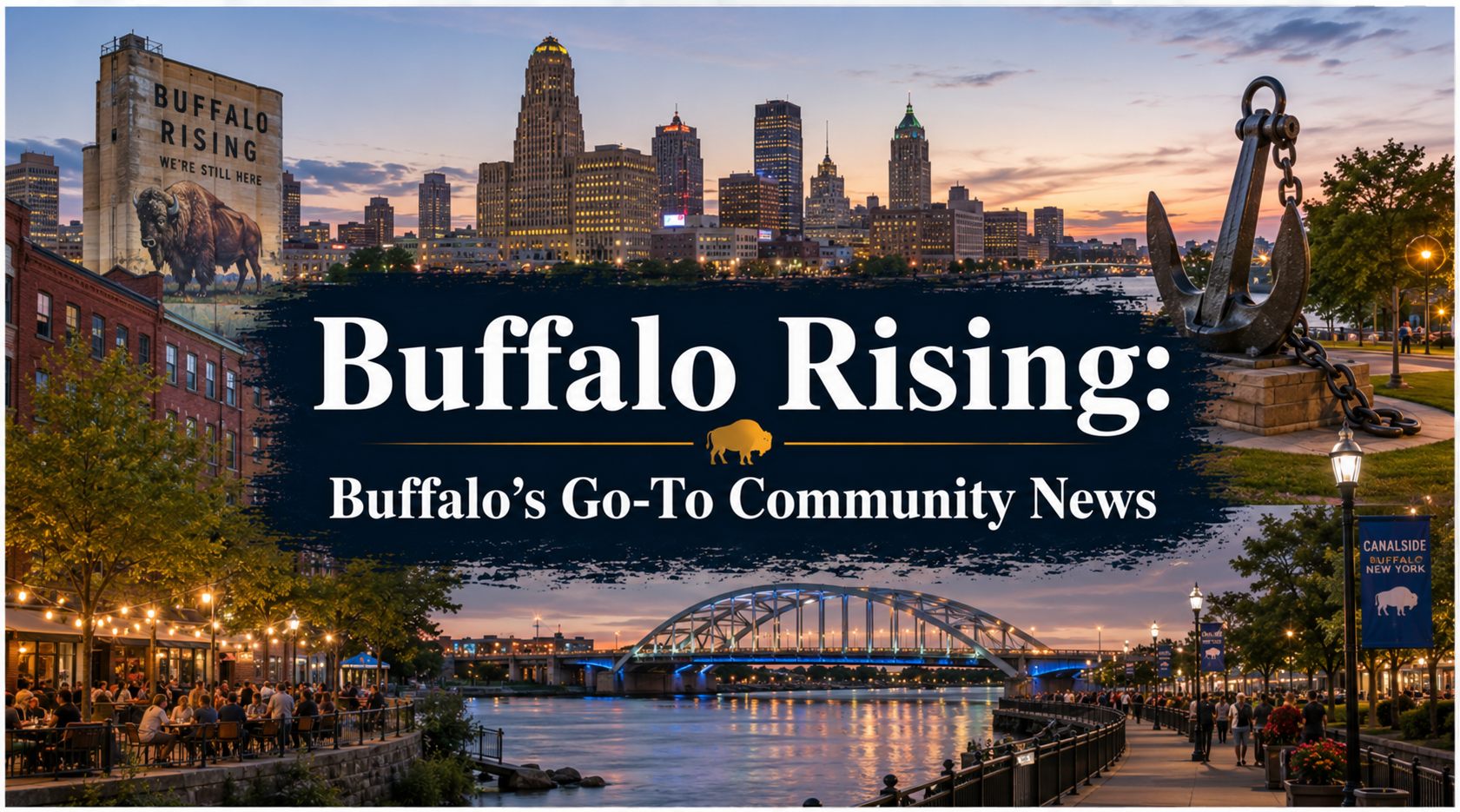

One city, dozens of neighborhoods, thousands of stories beyond breaking news. That gap explains why Buffalo Rising has become a familiar stop for readers who want more than alerts, crime updates, weather, and final scores. Buffalo Rising works best as a community-minded publication: part local news source, part city magazine, part development watcher, and part bulletin board for the people and places shaping Western New York.
That mix matters because Buffalo is often understood through fragments. One reader follows waterfront projects. Another wants restaurant openings, theater reviews, preservation fights, neighborhood events, or a closer look at a building everyone else drives past. A broad local publication can connect those interests without pretending they are all the same kind of story.
The smart way to read it isn’t as a replacement for every newspaper, television station, public record, or government notice. It’s more useful than that narrow comparison. Read it as a running conversation about what Buffalo is becoming, what it risks losing, and who is trying to move the city forward.
Buffalo Rising in Brief
Buffalo Rising is a community-focused digital publication covering Buffalo and Western New York through stories about development, neighborhoods, arts, food, events, local businesses, history, and civic life. Its value comes from showing how projects and people affect the city beyond the day’s biggest headlines, while giving readers ideas for what to watch, visit, support, or question.
Why Does Buffalo Rising Feel Different?
Local news usually gets judged by speed. Who posted first? Who sent the push alert? Who had a camera at the scene? Those questions matter during emergencies, elections, major public decisions, and fast-moving events. But they don’t explain why a vacant storefront matters to one block, why a small theater production can reveal a larger cultural shift, or why a proposed demolition can stir a preservation fight before most residents know the building’s story.
Buffalo Rising takes a wider view of relevance. Its current site structure spans Metro, Real Estate, Business, Arts/Culture, Community, Bars/Restaurants, and Events/Festivals, with more specific lanes for subjects such as urbanism, preservation, grassroots activity, theater, and local food. That menu tells you something before you open a single article: the publication treats city life as connected rather than boxed into a hard-news desk.
A city-first editorial frame
The strongest community publications understand that a restaurant opening isn’t only about dinner. It can also be a real estate story, a small-business story, a streetscape story, or a sign that foot traffic is changing. A new apartment project isn’t only about architecture. Readers may care about affordability, design, parking, preservation, neighborhood scale, and whether the ground floor will add anything useful to the street.
That layered way of looking at place is where Buffalo Rising earns attention. The site identifies itself as an independently owned and operated digital publication, says it has served the region since its 2004 launch, and describes its work as editorial and critical coverage of subjects related to Buffalo. Longevity doesn’t make every article correct or every opinion persuasive. It does mean the outlet has had years to build a recognizable voice around local change.
I’ve noticed that readers often underestimate how valuable continuity can be. A single development announcement is easy to summarize. The harder work is remembering what stood on the site before, what earlier plans promised, why a proposal stalled, and what changed when it returned. City knowledge accumulates. When an outlet keeps looking at the same streets over time, even short updates can carry more context than their word count suggests.
A wider definition of useful
The publication’s appeal also comes from its willingness to cover ordinary civic life. A farmers market event, mural project, neighborhood survey, local business move, theater review, or old-building update may not lead the evening news. Yet those stories often shape how residents spend their weekends, where they put their money, and what local issue they discuss next.
Look, not every reader wants every category. That’s normal. A preservation follower may skip restaurant pieces. A food reader may have little patience for zoning chatter. The variety works because the site is less like a single column and more like a busy neighborhood noticeboard with editorial judgment layered on top.
The result feels closer to how people experience a city. Life doesn’t arrive in neat beats. You hear about a street project while planning dinner, notice an old warehouse on the way to a concert, then wonder who owns it and what is planned. Community coverage catches those crosscurrents.
Reading the Coverage Mix
The easiest mistake is to compare Buffalo Rising with only one kind of competitor. It isn’t simply a daily newspaper, an event calendar, a development blog, or a lifestyle magazine. It borrows useful traits from each, which is why readers should judge it by fit rather than by a single newsroom standard.
| Source type | What it usually does best | Where Buffalo Rising can add value | What you should still verify elsewhere |
|---|---|---|---|
| Breaking-news outlet | Immediate alerts, public safety, major government action, live updates | Neighborhood meaning, follow-up interest, local reaction, place-based context | Fast-changing facts, official instructions, emergency details |
| Traditional newspaper | Reporting depth, public records, investigations, broad civic coverage | More frequent attention to small projects, openings, culture, and street-level change | Complex accountability claims and major policy questions |
| Event calendar | Dates, times, locations, ticket information | Why an event matters, who is behind it, and what else is connected to it | Last-minute schedule, price, venue, and availability changes |
| Social media feed | Speed, firsthand promotion, community chatter | Edited context and a more durable record than a passing post | Original source, missing context, rumors, and altered details |
| Local lifestyle magazine | Dining, culture, people, seasonal ideas | A stronger link between lifestyle subjects and development or civic identity | Promotional claims, availability, and changing business details |
This comparison is less about ranking one source above another and more about assigning each one a job. A reader who expects a community publication to function like an emergency desk will be frustrated. A reader who expects a television newscast to track every facade change, porch festival, adaptive-reuse proposal, or small gallery event will miss plenty.
A realistic weekend scenario shows the difference. Suppose you have friends visiting Buffalo. A general search engine may return the same famous attractions and restaurant lists it showed last year. Buffalo Rising may surface a new festival, a current exhibition, a neighborhood business, a theater review, or a fresh waterfront discussion. You still confirm hours and tickets with the organizer, but the publication helps you discover options that broad travel pages often flatten.
The development side works the same way. Someone curious about a construction fence on Main Street may not need a full policy investigation. They may first want the address, project name, prior use, proposed design, and a sense of why local readers are arguing about it. That first layer of context has real value.
And the mix creates useful collisions. A real estate reader may end up learning about public art. A food reader may discover the history of a commercial district. A theater follower may notice a preservation issue tied to a venue. Those accidental connections are difficult to measure, but they are one reason city publications become habits instead of occasional search results.
Local reporting changes what counts as news.
National news trains readers to look for scale. Bigger numbers, louder conflict, broader consequences. Community news often works in the opposite direction. The smaller the geographic focus, the more a modest change can matter.
A new bench, crosswalk, patio, mural, storefront sign, or pocket park may sound trivial from far away. Up close, it can change how long people stay on a block, whether they notice a business, or how safe and welcoming a public space feels. The same is true of demolition permits, infill housing, tree loss, vacant lots, and reuse plans. The stakes are local, but they aren’t fake.
According to Buffalo Rising, its editorial team covers a broad range of Buffalo subjects as events unfold, and its current homepage reflects that claim with stories across waterfront planning, urbanism, arts, restaurants, neighborhood surveys, conservation, and festivals. A general-interest outlet might treat those as separate verticals. A community publication can show how they overlap.
This is also where tone becomes part of the product. Buffalo Rising often reads like a publication that wants readers to care about the city, not merely observe it. That can make stories lively and accessible. It can also produce enthusiasm that a skeptical reader should keep in view. Civic affection is not a flaw, but affection can shape which projects receive excitement, which losses feel urgent, and which voices appear first.
The pattern I’ve seen across local media is simple: readers are good at spotting obvious bias and much worse at noticing selective attention. What gets covered repeatedly starts to feel central. What receives little attention can disappear from the mental map. That is true for every outlet, not just this one.
Local publications also become informal archives. Search an address, organization, neighborhood, or annual event years later, and an old article may be the only easy-to-find record of what people expected at the time. That archival role deserves more respect than it gets. It also creates messy questions about broken links, old assumptions, and outdated contact details, but that’s a different article.
The best response isn’t cynicism. It’s active reading. Notice the frame, follow the links, check the date, and ask whose view is missing. Curiosity is more useful than automatic agreement.
Where Most Readers Go Wrong
The bad advice around local media is oddly repetitive: pick one trusted outlet and stick with it. That sounds tidy. It’s also a poor way to understand a city.
No single publication sees everything. Newsrooms have limited staff, different priorities, different audiences, and different definitions of importance. Community contributors hear about stories that institutions miss. Traditional reporters may have stronger access to records, legal review, and public officials. Television can move quickly. Radio can offer immediacy and conversation. Neighborhood groups may know a problem months before it reaches a formal agenda.
Getting annoyed at Buffalo Rising because it isn’t a full substitute for all of those sources misses the point. The smarter question is what it adds to your information mix.
One common error is treating event announcements as permanent facts. Dates move. Outdoor programs change with weather. Ticket availability disappears. Restaurants adjust hours. Development plans are revised. A useful article may lead you to the right place, but the original organizer, business, planning document, or government notice should settle the current details.
Another mistake is confusing a proposal with a completed outcome. Renderings are persuasive. So are phrases like “planned,” “expected,” and “coming soon.” Yet financing can shift, approvals can take longer than expected, tenants can change, and construction schedules can slip. Readers should watch the verbs. “Proposed” is not “approved.” “Approved” is not “funded.” “Under construction” is not “open.”
I see this problem most often in development coverage because people remember the image and forget the status. Six months later, they talk about a concept rendering as if the project were guaranteed. That isn’t always the publication’s fault. Headlines, social sharing, and quick reading strip away uncertainty.
Readers also mistake the loudest online reaction for the broadest community view. Comments and social shares can reveal real concerns, but they are shaped by who saw the post, who felt motivated to reply, and which networks passed it around. Ten angry comments do not prove citywide opposition. A flood of praise does not prove consensus either. Treat reaction as a clue, not a poll. If a project affects a neighborhood, look for meeting records, resident groups, public testimony, and direct reporting from people closest to the change. The quietest stakeholders may have the most at risk.
A third mistake is assuming positive community coverage has no journalistic value. Some readers think only conflict counts as serious news. That view leaves out the slow work of institution-building: volunteer efforts, arts programming, neighborhood organizing, business experiments, public-space care, and local traditions. A city is shaped by problems and by the people trying to solve them.
But praise should still be read with open eyes. Ask who benefits, who pays, what trade-offs exist, and whether the article includes evidence beyond enthusiastic claims. Mild skepticism is healthy. Reflexive dismissal is lazy.
Here’s the Smarter Way to Read It
You don’t need a complicated media routine. You need a repeatable one. The goal is to use Buffalo Rising for discovery and local context while knowing when to move to another source for confirmation, accountability, or official detail.
- Start with the date and category. An event story from last year may still rank in search. A proposal filed months ago may have changed. The category also tells you whether you are reading news, opinion, a review, an event notice, or a business-focused piece.
- Read the verbs before the adjectives. Words such as “plans,” “seeks,” “proposes,” “could,” and “expects” reveal status. Adjectives tell you tone. Status should come first.
- Identify the original actor. Is the information coming from a city agency, developer, restaurant, arts group, neighborhood organization, sponsor, guest author, or staff writer? That source relationship affects what the article can prove and what it may leave out.
- Confirm practical details at the source. For an event, check the organizer or venue. For a public project, look for the agency page, meeting record, or planning document. For a business, confirm hours, menu, reservations, and opening status directly.
- Search the site for earlier coverage. An address, project name, neighborhood, or organization may have a history. Older pieces can reveal delays, changed designs, prior owners, and arguments that a new article assumes you already know.
- Add one source with a different job. Pair a Buffalo Rising article with a newspaper report, public document, broadcast update, neighborhood publication, or firsthand announcement. You are not trying to create homework. You are trying to avoid a one-window view.
This process takes only a few minutes once it becomes a habit. It also changes how you read headlines. You stop asking, “Is this outlet good or bad?” and start asking, “What kind of evidence is this giving me?”
Consider a resident following a waterfront proposal. Buffalo Rising may offer renderings, design discussion, historical context, or a strong opinion about what the site could become. A government source may provide the formal plan, public meeting schedule, environmental review, or procurement details. A traditional newsroom may examine funding, politics, or accountability. Taken together, those pieces form a stronger picture.
The same method works for something lighter. You find a restaurant opening story, enjoy the photos, and decide to visit. Before driving across town, you check the business’s current hours and reservation policy. That isn’t distrust. It’s ordinary care.
And because local stories can change quickly, especially events and development proposals, the article date is part of the meaning. Read it first, not last.
Trade-Offs Nobody Should Ignore
Community publishing costs money even when readers aren’t handed a bill for every article. Writers, editors, photographers, web hosting, sales staff, event coverage, newsletters, and technical upkeep all require support. Buffalo Rising’s site openly presents sponsorship opportunities, promotes reader support, and invites story leads, press releases, event notices, and article submissions for consideration. Those features are common in local publishing, but they create trade-offs readers should understand.
The upside is access and range. Sponsors, advertisers, partners, contributors, and community submissions can help an outlet cover more businesses, events, organizations, and projects than a small staff could find alone. A local entrepreneur may get visibility. A nonprofit can reach residents. A festival that would never receive television time can find an audience.
The downside is that promotional material can sit near editorial work, and the difference may not always feel obvious to a hurried reader. You should look for author names, labels, disclosures, source language, and the amount of independent reporting in the piece. A story built mostly from a press release can still be useful. It simply serves a different purpose than a reported article that tests claims against records and opposing views.
This isn’t a reason to sneer at community coverage. Frankly, the habit of demanding unlimited local reporting while refusing every funding model is detached from reality. Advertising can create pressure. Sponsorship can create pressure. Subscriptions can narrow access. Philanthropy can shape priorities. Ownership can shape priorities. Every model has friction.
The reader’s job is not to discover a magically pure outlet. It is to understand incentives.
There is another trade-off: breadth can reduce depth. A site covering restaurants, architecture, public space, theater, neighborhood history, business, events, and civic ideas has to make choices. Some stories will be short. Some will rely heavily on a single source. Some will celebrate more than investigate. Others may offer sharp criticism. Expecting identical methods across every category would be unrealistic.
My rule is simple. The bigger the consequence, the more verification you need. Choosing a weekend event requires a current time and location. Supporting a major public subsidy, accepting a contested development claim, or forming a view about a neighborhood dispute requires more reporting and more than one voice.
Community Attention Matters
A publication doesn’t only report attention. It directs it.
When Buffalo Rising places a small business, old building, cultural event, public-space idea, or neighborhood campaign on its homepage, it gives that subject a chance to move beyond its immediate circle. Readers may attend, donate, comment, contact an official, visit a block they usually ignore, or share the story with someone who has useful expertise.
That effect can be constructive. A preservation concern becomes visible before demolition. A new café finds early customers. A neighborhood survey reaches residents who missed the meeting notice. An arts group sells more seats. A public proposal receives better questions because more people have seen the plan.
Attention can also be uneven. Neighborhoods with active promoters, strong networks, appealing photography, or media-savvy organizations may receive more coverage than places where important work happens quietly. This is not unique to Buffalo Rising. It is one of local media’s hardest structural problems.
The site’s current community and urbanism coverage includes reader-facing calls for input, neighborhood investment discussions, preservation subjects, and public-space stories, while its events pages feature festivals, concerts, cultural programs, and recurring local gatherings. That range can help residents move from reading to participation.
A realistic small-business scenario makes the value clearer. Suppose a shop opens in a reused neighborhood storefront. A short feature may introduce the owner, explain the concept, show the interior, and connect the opening to changes on the block. The article won’t guarantee long-term success. It may not examine the company’s finances. But it can create the first wave of awareness that local businesses often struggle to buy.
I’ve watched readers treat this kind of visibility as fluff because it lacks conflict. That judgment is too easy. Local economies are made of repeated small decisions: where to eat, where to shop, which event to attend, which fundraiser to share, which district to revisit. Coverage influences those choices.
Still, attention should never be confused with endorsement. A beautiful photo does not answer questions about wages, accessibility, affordability, public subsidy, neighborhood fit, or long-term viability. Those questions remain available to any reader willing to ask them.
How local news habits travel
The value of neighborhood reporting becomes clearer when you compare cities. Buffalo has its own history, street patterns, institutions, development debates, and civic language. Brooklyn has different pressures and a far larger urban context. Yet readers in both places need reporting that translates broad change into specific blocks, projects, businesses, and community consequences.
A reader looking across New York can see the same local principle in Brooklyn community news and neighborhood coverage: citywide headlines rarely explain how change feels at street level. The useful question is not whether one city’s model can be copied into another. It is which reporting habits travel well.
One habit is following places over time. Another is treating culture and commerce as civic subjects, not side dishes. A third is giving residents enough context to recognize a proposal before the public decision is finished.
Buffalo Rising’s strongest role sits in that middle ground between formal reporting and community conversation. It can introduce a subject before you know the official vocabulary. It can make architecture readable to non-specialists. It can turn a neighborhood event into a reason to learn about the people organizing it. It can remind readers that a city is not only governed through elections and budgets; it is also shaped through leases, renovations, performances, storefronts, volunteer work, and arguments about what deserves to remain.
That middle ground is especially useful for newcomers. A person who has lived in Buffalo for six months may recognize major landmarks but still lack the connective tissue: why one building triggers a strong reaction, why a particular commercial strip matters, or why a modest public-space proposal attracts fierce debate. Community coverage supplies names, history, and recurring characters. It doesn’t replace deeper research, but it gives readers a map of questions worth asking. Longtime residents benefit too, because familiarity can hide change. The block you stopped noticing may be the block where the next argument over preservation, housing, or public use has already begun.
The risk is familiarity turning into passivity. Once you like an outlet’s voice, you may stop checking its assumptions. Don’t. Loyalty should make you a more attentive reader, not an easier one.
Frequently Asked Questions
Is Buffalo Rising a newspaper?
No, it is better understood as an independent digital local publication or city magazine rather than a traditional daily newspaper. It covers newsworthy projects and civic issues, but it also publishes restaurant, arts, event, business, history, real estate, and community stories. Its mix is broader and more feature-driven than a standard breaking-news desk.
What does Buffalo Rising cover?
Buffalo Rising covers Buffalo and Western New York through subjects such as development, urbanism, neighborhoods, business, arts, culture, restaurants, events, preservation, history, and community activity. The balance changes with the news cycle, season, contributor mix, and local calendar.
Can I rely on Buffalo Rising for breaking news?
Honestly, it depends. The site can publish timely local updates, but emergency information and fast-changing public facts should be checked with official agencies and dedicated breaking-news outlets. Use Buffalo Rising for added context, community reaction, discovery, and follow-up, not as your only source during a crisis.
How old is Buffalo Rising?
More than two decades have passed since the publication’s launch in 2004. That history matters because local development, preservation, business, and neighborhood stories often make more sense when an outlet has covered the same places repeatedly. Older articles can be useful archives, though current details still need checking.
Does Buffalo Rising only write positive stories?
Not entirely. The site includes criticism, opinion, preservation concerns, development debate, and skeptical takes alongside celebratory coverage of local people, projects, businesses, and events. The popular misconception is that community-minded automatically means uncritical. Readers should judge each article by its evidence, sourcing, tone, and stated purpose.
Is Buffalo Rising useful for planning a weekend in Buffalo?
Yes, it can be a strong discovery source for festivals, performances, restaurant news, cultural events, neighborhood activities, and seasonal ideas. Confirm the final date, time, ticket status, weather policy, and venue details with the organizer because practical information can change after an article is published.
Can local organizations submit stories or event information?
The publication says it accepts story leads, press releases, event notices, and article submissions for consideration. Submission does not necessarily mean publication, and readers should still distinguish between staff reporting, guest contributions, announcements, and promotional material when evaluating a piece.
Why read Buffalo Rising if I already follow local TV news?
TV news and Buffalo Rising usually perform different jobs. Broadcast outlets are often stronger at immediate updates, weather, traffic, public safety, and major daily stories. Buffalo Rising can add neighborhood texture, project details, cultural coverage, local business discovery, and longer-running interest in how the city’s physical and social character changes.
Make Local News Useful
Useful local news habits aren’t built around one perfect outlet. They come from knowing what each source does well and refusing to confuse discovery with proof. Buffalo Rising is most useful when you read it for city texture, community ideas, development interest, cultural life, and the small changes that larger news cycles often pass over.
Do one thing today: open a story about a neighborhood, project, business, or event you normally would have skipped, then check one original source connected to it. That small act turns casual browsing into informed attention.
After years of comparing local coverage, one pattern keeps holding: people understand a city better when they follow not only its biggest conflicts, but also its unfinished plans, overlooked places, and ordinary acts of care.