
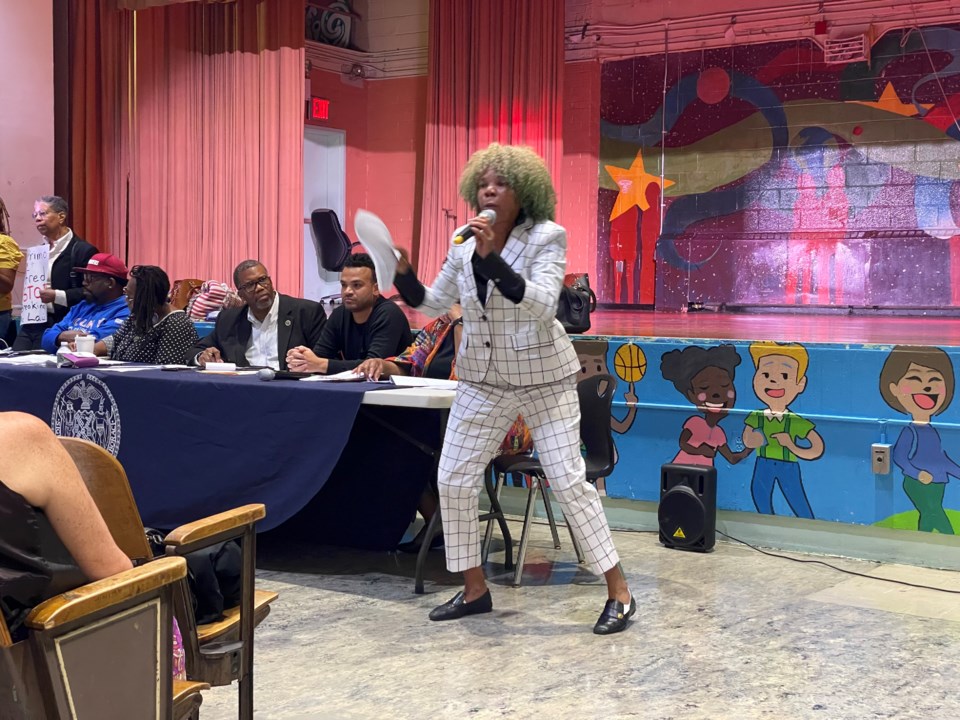

Community Board Meetings in Rockaway Beach are handled by Queens Community Board 14, which serves the Rockaway Peninsula and Broad Channel. Full board meetings are scheduled for the second Tuesday from September through June at 7 p.m., and the location alternates between Rockaway Beach and Far Rockaway. Check the posted agenda before you leave.
This guide approaches the process as a practical NYC service explainer without claiming invented residency, city employment, or professional authority. The details are grounded in current board information, city service channels, and New York public-meeting rules rather than assumptions about how local government works.
Use this table as the quick version of Community Board Meetings in Rockaway Beach before deciding whether you need the full board, a committee, 311, or direct agency contact.
| # | What to Handle | Best Move | Typical Cost |
|---|---|---|---|
| 1 | Understanding CB14 | Know what the board can and cannot do | Free |
| 2 | Meeting date and venue | Check the current agenda before traveling | Free |
| 3 | Unresolved city complaint | Start with 311 and save the request number | Free |
| 4 | Supporting paperwork | Bring a short, organized record | Printing/transit only |
| 5 | Public comment | Arrive early and follow sign-in instructions | Free |
| 6 | Specialized neighborhood issue | Match it to the right CB14 committee | Free |
| 7 | Getting to the meeting | Plan Rockaway transit before leaving | Normal travel costs |
| 8 | Follow-up | Send a concise written recap after the meeting | Free |
Before Community Board Meetings in Rockaway Beach
A community board meeting makes more sense once you stop thinking of it as a small City Hall. Community boards have influence, local knowledge, agency contacts, and an official advisory role, but they do not control every city department. That distinction saves residents a lot of wasted time.
1. Know What Queens Community Board 14 Actually Handles
Queens Community Board 14 covers Broad Channel and the Rockaway Peninsula, including Rockaway Beach, Arverne, Edgemere, Rockaway Park, Far Rockaway, Bayswater, Belle Harbor, Neponsit, and Breezy Point. Its work includes quality-of-life concerns, municipal services, land use, zoning, public safety, and city budget priorities. The Queens Community Board 14 overview describes both its service role and its advisory responsibilities.
That matters if your problem involves sanitation, transportation, a recurring street condition, parks, development, housing policy, or another issue crossing between residents and city agencies. Board staff may help identify the correct agency or follow an unresolved local issue.
The catch is important: a community board cannot simply order another agency to approve an application, issue a permit, repair something immediately, or decide a legal dispute. Treat it as a neighborhood government access point, not an express counter hidden behind the regular system.
2. Confirm the Date and the Exact Meeting Location
Community Board Meetings in Rockaway Beach do not always happen at one permanent venue. Queens CB14 currently schedules its regular full-board meetings on the second Tuesday of each month from September through June, beginning at 7 p.m. Its current CB14 calendar tells residents to check the agenda because meetings rotate between Knights of Columbus at 3-33 Beach 90th Street in Rockaway Beach and Bayswater Jewish Center at 23-55 Healy Avenue in Far Rockaway.
As of August 2026, the next listed full-board meeting is September 8, followed by October 13, November 10, and December 8. There is no regular July-August stretch on the published September-through-June schedule.
That venue switch is the detail first-timers miss. Showing up on Beach 90th Street when the night’s meeting is in Far Rockaway can ruin the evening because crossing the peninsula takes time. In February, build in extra time for dark, cold transfers. In summer, beach traffic can turn a simple trip into a slow one.
Build a Paper Trail Before You Speak
The fastest route through neighborhood bureaucracy usually starts before anyone reaches the microphone. If the problem belongs with a city agency, creating a record gives board staff something concrete to follow instead of a general story that has to be reconstructed later.
3. Start With 311 When the Problem Is a City-Service Complaint
For potholes, missed services, street conditions, noise complaints, sanitation problems, damaged public infrastructure, and many other city-service issues, start through the appropriate city channel rather than waiting for a board meeting. NYC’s 311 service-request reporting system tracks requests by agency, complaint type, geography, and other categories, including community-board areas.
Save the service-request number, the date you filed it, the location involved, and any agency response. If nothing changes, that record gives CB14 staff a much cleaner starting point.
Think of it as the difference between saying, “Nobody has fixed this for weeks,” and saying, “I reported this on these dates, these are the request numbers, and this is what remains unresolved.” The second version can be routed.
One thing people get wrong is assuming a community board meeting replaces 311. It usually works better as an escalation point after the normal reporting channel has produced a trackable record.
4. Bring One Useful Packet, Not Every Paper You Own
A thick folder feels persuasive at home. At a public meeting, it can bury the exact detail someone needs.
Bring or prepare a one-page summary containing your name, the affected location, what happened, which city agency you contacted, relevant case or request numbers, what response you received, and what outcome you are asking the board to help pursue. Add a few photographs or copies only when they explain something the summary cannot.
For a recurring street problem, dated photos are more useful than twenty nearly identical pictures. For correspondence, highlight the agency name, date, and reference number instead of handing someone a full email chain. If several neighbors have the same problem, showing that pattern can matter more than adding pages.
There is normally no admission fee for attending. Your likely 2026 out-of-pocket cost is simply transit, parking, or a few printed pages.
For official channels, use NYC’s normal service system for routine complaints and emergency services for immediate danger. CB14 can then help with district-level follow-up, agency coordination, or identifying where an unresolved issue belongs. New York’s Open Meetings Law protects public access to covered government meetings, but public attendance does not mean every attendee automatically receives unlimited speaking time.
At Community Board Meetings in Rockaway Beach
Showing up prepared is only half the job. The other half is knowing how a full-board meeting functions. There may be agency reports, public hearings, committee business, resolutions, elected-official representatives, and residents trying to raise unrelated concerns in the same room.
5. Arrive Early If You Want to Speak
At Community Board Meetings in Rockaway Beach, arriving at the advertised starting time can already be later than ideal if that night’s procedures require speakers to sign in beforehand. Older CB14 meeting notices have specifically instructed residents wishing to speak to sign in at the venue before the meeting begins, so the safe move is to read the current agenda and arrive early rather than assuming the procedure never changes.
Prepare a short version of your issue first. Start with the location and problem, then give the request number or agency history, and finish with the action you want help pursuing. You can provide supporting material separately.
Do not spend half your speaking opportunity explaining the entire history of the Rockaways before reaching your problem. Board members dealing with transportation, sanitation, housing, parks, and development usually need the specific block, intersection, property, project, or agency involved.
And remember that attending and speaking are different things. Public access is protected, while the rules for public participation can depend on the body’s procedures.
6. Match Your Problem to the Committee That Handles It
The full board may be where residents first encounter CB14, but much of the detailed work happens through committees. The official CB14 committee list currently includes areas such as Transportation, Housing/Land Use, Environmental, Parks/Public Safety, Economic Development, Health/Social Services, Youth Services/Education, and Budget.
That gives you a better question to ask: not simply “Can the community board fix this?” but “Which committee should see this?”
A proposed traffic change belongs in a different conversation from a zoning application. Beach or wetland concerns may need environmental review. A park condition may fit Parks/Public Safety. Development proposals can reach Housing/Land Use.
Committee dates are not always as predictable as the regular full-board schedule; CB14’s calendar posts committee agendas as they are scheduled.
For parents, older residents, or anyone with mobility needs, contacting the board before traveling can also prevent an unnecessary trip if the relevant issue is being handled at a different meeting.
How to Get There Without a Car
Rockaway trips are measured in transfers and service patterns, not miles. A meeting that looks geographically close on a map can still take longer than expected when the venue shifts from the central peninsula to Far Rockaway.
7. Plan Around Rockaway Transit, Especially at Night
For the Beach 90th Street venue, rail service on the Rockaway Park branch may involve the Rockaway Park Shuttle, while A-train patterns can vary by time and planned work. MTA service changes have also periodically altered Rockaway service, which is why checking the live trip planner shortly before leaving is smarter than memorizing one route.
Buses also matter here. The Q22 runs along the Rockaway corridor, while the Q53-SBS connects Rockaway Park with the Woodside direction through Cross Bay and Woodhaven.
The Far Rockaway meeting venue is a separate trip, so do not assume the route you used for Beach 90th Street will work equally well.
Accessibility deserves its own check. Never assume the closest subway station is step-free because it appears convenient on the map. If you use a wheelchair, walker, or stroller, verify the current accessible route and elevator status before leaving.
After Community Board Meetings in Rockaway Beach
The useful part often starts after the chairs are folded. A meeting can identify the right agency, committee, staff member, or next public hearing, but someone still has to keep the record moving.
8. Follow Up With a Short Written Recap
After Community Board Meetings in Rockaway Beach, send a concise follow-up while the discussion is still fresh. Include the issue, location, relevant service-request or case number, the meeting date, and the next action that was discussed.
Do not write five paragraphs thanking everyone before reaching the request. A clear subject and four or five useful sentences make it easier for staff to forward the matter to an agency liaison or committee.
CB14 also publishes meeting materials and minutes for many past full-board meetings, giving residents a way to check what was discussed or formally recorded. The board’s reports page currently contains meeting minutes from multiple 2026 sessions as well as earlier years.
If someone told you an agency representative would follow up, give the process reasonable time and then reference that conversation specifically. “I attended the meeting” is weak. “At the May meeting, this issue was referred for agency follow-up under request number X” gives the next person something usable.
Where Locals Handle Paperwork Faster—and Where They Don’t
The useful “hack” is organization, not access to a secret line.
A community board can help residents figure out which agency owns a problem, surface repeated neighborhood complaints, put an issue before the appropriate committee, and maintain pressure when a normal service channel has stalled. NYC describes community boards as part of the city’s system for citizen participation and local municipal-service coordination.
What it cannot promise is same-day approval, special treatment, or a bypass around an agency’s legal process. Showing up with a permit application does not turn an advisory board into the permitting agency. Raising a private legal dispute does not turn volunteers into a court.
The overrated move is arriving angry, carrying fifty pages, and expecting the room to solve everything before adjournment. The better move is a clear paper trail, one specific request, and the correct committee or agency.
That is where locals handle paperwork faster: fewer wrong offices, fewer missing reference numbers, and fewer weeks spent asking the wrong government body.
Frequently Asked Questions
Are Community Board Meetings in Rockaway Beach open to the public?
Yes. Community-board meetings operate within New York’s public-meeting framework, and NYC community boards describe their meetings as open to the public. Attendance does not necessarily guarantee unlimited speaking time, however, so check CB14’s current agenda for public-comment and sign-in procedures before arriving.
When are Community Board Meetings in Rockaway Beach held?
Queens CB14 currently schedules regular full-board meetings on the second Tuesday of each month from September through June, starting at 7 p.m. The published 2026 calendar lists September 8 as the first regular meeting after the summer break. Always confirm the date before traveling.
Where does Queens Community Board 14 meet?
The full board currently uses two listed venues: Knights of Columbus on Beach 90th Street in Rockaway Beach and Bayswater Jewish Center on Healy Avenue in Far Rockaway. The location can change between meetings, so the individual agenda matters more than remembering where the previous meeting occurred.
Can Community Board Meetings in Rockaway Beach make a city agency fix my complaint?
Not directly. Community boards have an advisory and coordinating role rather than blanket authority to order city agencies to take a specific action. They can help raise district concerns, communicate with agencies, and follow persistent service problems, which is why an existing 311 or agency record is useful.
Should I file a 311 complaint before going to the community board?
For a problem handled through 311, creating the service request first is usually the more useful sequence. It gives you a reference number and establishes which agency received the complaint. If the matter remains unresolved, you can bring that record to board staff rather than starting with an undocumented report.
Do I have to live in Rockaway Beach to attend?
Public meetings are not private neighborhood-club sessions. CB14 covers a much wider district than Rockaway Beach alone, including the Rockaway Peninsula and Broad Channel. Residents from other parts of the district may have business before the board, and members of the public can attend covered meetings.
Do Community Board Meetings in Rockaway Beach cost anything to attend?
There is no listed admission charge for attending the regular public board meeting. Your practical expenses are more likely to be transportation, parking, or printing. Avoid building a trip around a remembered location, though; confirming that evening’s venue can save more time and money than anything else.
What should I bring if I want paperwork handled faster?
Bring a one-page explanation, the exact affected location, dates, agency correspondence, service-request or case numbers, and a small number of useful photographs or documents. The goal is not to prove that you own the biggest folder. It is to make the issue easy for someone else to identify and route.
Community Board Meetings in Rockaway Beach work best when you treat them as a public escalation point, not a shortcut around city procedure. A clean service-request trail, one-page summary, and correct committee usually matter more than a long speech. Before the next meeting, open the current CB14 agenda and confirm the venue.
This is general local information. Meeting locations, schedules, transit service, procedures, and agency rules can change, and matters involving money, housing, immigration, legal rights, or health should be taken to the appropriate qualified professional.
Latest New York Local Reports
Neighborhood guides covering events, everyday life, housing, lodging, local services and seasonal activities across New York.