
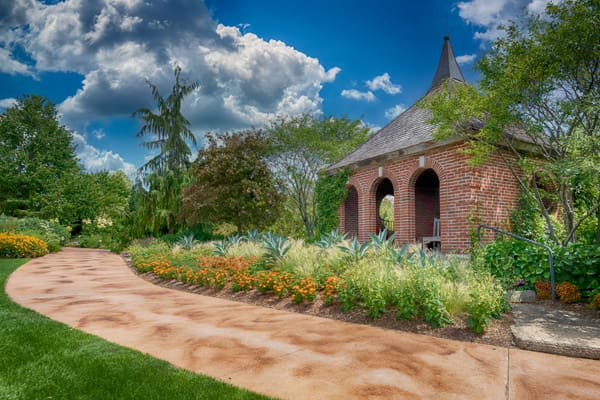

When people search for Botanical Gardens in Bay Ridge, the first name to know is Narrows Botanical Gardens. But the neighborhood also has a useful network of planted parks and small green spaces where a grocery run, school pickup, or walk home can include ten quiet minutes outside. Narrows is the plant-first destination; Shore Road Park, Owl’s Head Park, and McKinley Park are the strongest everyday alternatives.
This guide uses current official park, garden, ferry, and transit information rather than invented first-person credentials. Locations and accessibility details were checked against public agency and institution information current in August 2026.
| # | Place | Area and nearest useful subway | Rough cost | Best for |
|---|---|---|---|---|
| 1 | Narrows Botanical Gardens | Shore Road near Bay Ridge Avenue; Bay Ridge Ave R | Free everyday green-space stop | Plants and a quiet waterfront break |
| 2 | Shore Road Park and Parkway | Bay Ridge waterfront; Bay Ridge Ave/77 St R corridor | Free | Long walks and harbor views |
| 3 | Owl’s Head Park | 67th St and Colonial Rd; Bay Ridge Ave R | Free | Mature trees and shade |
| 4 | Leif Ericson Park | 66th–67th St corridor; 59 St N/R or 8 Av N | Free | Errands, families, active park time |
| 5 | John Paul Jones Park | 101st St near 4th Ave; Bay Ridge–95 St R | Free | South Bay Ridge sitting |
| 6 | John J Carty Park | Fort Hamilton Pkwy, 94th–101st Sts; Bay Ridge–95 St R | Free | Families and longer breaks |
| 7 | McKinley Park | 73rd St, Fort Hamilton Pkwy and 7th Ave; 77 St R | Free | Inland shade and planted areas |
| 8 | Fort Hamilton Triangle | 94th St between 4th and 5th Aves; Bay Ridge–95 St R | Free | A five-minute green pause |
The table deliberately mixes a true botanical garden with neighborhood parks. Bay Ridge does not have eight separate formal botanical institutions, and pretending otherwise would make the list less useful. NYC Parks confirms the locations of the major public spaces here, while the MTA currently lists 86 St and Bay Ridge–95 St among Brooklyn’s accessible subway stations.
Botanical Gardens in Bay Ridge Along the Waterfront
The waterfront is where the idea behind Botanical Gardens in Bay Ridge makes the most sense. You get intentional planting at Narrows, then a much broader ribbon of trees, lawn, paths, benches, harbor air, and open sky through Shore Road Park.
1. Narrows Botanical Gardens
Narrows Botanical Gardens is the real botanical stop on this list. It occupies part of Shore Road Park and is maintained with a strong community and volunteer focus. The garden’s current collections include native plant areas, pollinator-friendly planting, a rose garden, sensory planting, wildlife habitat, meadow spaces, and other changing displays. The official Narrows Botanical Gardens visitor information also makes clear that the landscape changes considerably with the seasons.
That seasonal change matters. May through October carries much of the educational and event activity, while a winter walk is more about structure, waterfront light, and the quieter side of the grounds. The Bay Ridge Ave R station is the obvious subway reference point, although it is not included on the MTA’s current accessible-station list. The Bay Ridge NYC Ferry landing at American Veterans Memorial Pier is also nearby on the waterfront and is served by multiple routes depending on day and season.
For an ordinary neighborhood stop, this is the best choice for someone who actually wants to look at plants rather than merely sit under trees. The catch is simple: if you arrive expecting a huge institutional garden that takes half a day, the scale will feel modest. That is part of why it works between errands.
2. Shore Road Park and Parkway
Shore Road Park and Parkway is the broader waterfront setting surrounding the garden experience. NYC Parks describes the park as one of Bay Ridge’s major waterfront spaces, and its long shape means a visitor can enter for ten minutes or keep walking for much longer. The NYC Parks page for Shore Park and Parkway is the useful official place to check current facilities and park information.
This is less about individual specimens and more about the combination of established trees, planted edges, lawn, the promenade, and views across the Narrows. In warm weather, early morning and the period before sunset are easier choices than a hot weekend afternoon. In February, the same exposed waterfront can feel far colder than the inland shopping streets. That exposure is worth remembering if your “quick sit” turns into a twenty-minute walk.
Botanical Gardens in Bay Ridge searches often blur Narrows and Shore Road Park together. They are connected geographically, but they serve different purposes: Narrows rewards slower plant watching; Shore Road gives you distance and breathing room. If you need a perfectly compact garden loop, Shore Road can feel too spread out.
Botanical Gardens in Bay Ridge Near Northern Errand Routes
North of the heart of Bay Ridge, the green-space pattern becomes more practical. These aren’t formal botanical gardens. They are places that work because they sit close enough to residential blocks, shopping streets, buses, and subway approaches that visiting them doesn’t require turning the day into an outing.
3. Owl’s Head Park
For mature trees, Owl’s Head Park is one of the strongest alternatives to formal Botanical Gardens in Bay Ridge. NYC Parks records a varied collection of established trees on the property, including pines, locusts, oaks, maples, corks, and beeches. Its 67th Street and Colonial Road side puts it naturally into a northern Bay Ridge walking day. The official Owl’s Head Park history provides more background on that landscape.
The park feels different from Narrows because the trees and terrain do most of the work. There is more room to wander, and the changing grade gives parts of the park a sense of separation from the surrounding street grid. For somebody carrying groceries, pushing a stroller, or trying to squeeze in a short break, that terrain can also be the drawback.
Bay Ridge Ave on the R is a useful nearby subway reference, but it is not on the current MTA accessible-station list. Travelers who need a step-free subway trip should plan around an accessible station and a surface connection rather than assuming the nearest station has an elevator.
4. Leif Ericson Park
Leif Ericson Park stretches through the 66th and 67th Street corridor between Fourth Avenue and Fort Hamilton Parkway, making it more entwined with everyday neighborhood movement than Narrows Botanical Gardens. NYC Parks lists the property at about 16.8 acres, so it is large enough for different sections to feel distinct rather than functioning as one small square.
The park’s Norse-themed design details are the specific feature that separates it from the others. NYC Parks notes decorative elements tied to Scandinavian heritage, including troll figures and architectural references. But planting is only part of the experience here; recreation occupies a significant share of the park, so someone seeking a silent flower garden may find more activity than expected.
For transit, the 59 St N/R and 8 Av N stations give useful accessible approaches from the north; both appear on the MTA’s current accessible-station list. That can make Leif Ericson more practical for a stroller or mobility device than choosing a closer-looking station without an elevator and then discovering the problem after arrival.
For an emergency in any park, call 911. For broken equipment, litter, damaged facilities, or other non-emergency public-park maintenance issues, NYC directs residents to 311; the city’s park maintenance complaint service explains what can be reported. Narrows Botanical Gardens also maintains its own contact channel for questions about its programming and garden activities.
Botanical Gardens in Bay Ridge Around the Southern Blocks
South Bay Ridge offers a different kind of pause. The subway terminus is closer, several parks sit within the Fort Hamilton side of the neighborhood, and the streetscape becomes a better fit for short green stops than for a continuous garden walk.
5. John Paul Jones Park
John Paul Jones Park works especially well when Botanical Gardens in Bay Ridge is really shorthand for “somewhere green to sit before going home.” The park is at 101st Street and Shore Parkway between Fourth Avenue and Fort Hamilton Parkway, close enough to Bay Ridge–95 St that the subway trip does not end with another major neighborhood crossing. NYC Parks lists the park at a little over five acres.
The visual anchor is not a flower collection but the park’s military memorial landscape. The Dover Patrol Monument, a tall stone obelisk erected in 1931, gives this space a character no other stop on the list shares. Around it, lawn and established greenery make the park useful for sitting without needing to “do” anything.
Bay Ridge–95 St is currently an accessible R station, with the elevator entrance listed by the MTA at 95th Street and Fourth Avenue. That makes this one of the easier southern choices for wheelchair users, people with walkers, or parents moving a stroller through the neighborhood.
The reason to skip it is equally clear: come for shade, lawn, and a pause, not for labeled plant collections.
6. John J Carty Park
John J Carty Park sits along Fort Hamilton Parkway between 94th and 101st Streets. It is larger than the tiny planted triangles nearby and functions more like an active neighborhood park, with recreation sharing space with the greenery. NYC Parks lists the site at roughly 8.5 acres.
Families have an especially practical reason to stop here. A major playground reconstruction reopened in 2024 with a new play space and updated amenities, while retaining the well-known whale climbing feature. That makes it easy to pair an adult’s need for a break with a child’s need to move after an errand-heavy afternoon.
The Bay Ridge–95 St R station is the main subway reference and is currently step-free. It is still sensible to check elevator status before leaving home, because an accessible station on a map is not the same thing as an elevator guaranteed to be operating at the exact moment you arrive.
What you will not get is botanical-garden quiet. Recreation can make the park busier, particularly when school is out or the weather finally turns good after a gray week.
Small Garden-Like Stops Between Bay Ridge Errands
Some of the most useful green spaces are not destinations at all. They work because you pass them while doing something else, which is closer to the promise behind this title than pretending every planted patch deserves a special trip.
7. McKinley Park
McKinley Park is the inland answer to Botanical Gardens in Bay Ridge, particularly for someone whose errands keep them closer to Fort Hamilton Parkway and Seventh Avenue than to Shore Road. NYC Parks places the park around 73rd Street, Fort Hamilton Parkway, and Seventh Avenue and lists it at roughly eight acres.
The plant-specific detail worth finding is Kathy Reilly Triangle at the southern end. When that section was redesigned, NYC Parks described plantings that included Blue Girl holly, firethorn, fountain grass, and lowbush blueberry. It is a small feature inside a larger recreational park, but it gives plant-minded visitors something more specific than generic lawn.
The nearest straightforward R approach is around the 77 St corridor, but 77 St is not on the MTA’s current accessible-station list. Anyone needing a step-free route should compare the accessible 8 Av N or 86 St R approaches with a bus or surface trip rather than choosing solely by which station looks closest on a diagram.
McKinley works best as an inland break. It is not worth crossing the whole neighborhood solely for a botanical experience if Narrows is what you actually want.
8. Fort Hamilton Triangle
Fort Hamilton Triangle is the smallest stop here by a huge margin. NYC Parks places it where Fourth Avenue, Fifth Avenue, and 94th Street meet and lists the property at only about 0.02 acre. That tiny scale is exactly why it belongs at number eight rather than being inflated into something it isn’t.
Think of it as planted punctuation in the street grid. If you are already walking between Fifth Avenue and the Bay Ridge–95 St subway, it provides a brief bit of greenery in a heavily built part of the neighborhood. The accessible subway station is close enough that the triangle also fits naturally into a south Bay Ridge route for someone avoiding stair-only stations.
But this is the entry to skip if you want a proper garden walk, a picnic, or twenty minutes under a tree. There simply is not the room. Its usefulness is measured in minutes, not acres.
How to Reach These Bay Ridge Garden Stops Without a Car
The R train is the backbone of most Botanical Gardens in Bay Ridge trips, but accessibility changes the calculation. The MTA currently lists 59 St, 86 St, and Bay Ridge–95 St as accessible R stations, while 8 Av on the N is another accessible option for the northern end of this group. Bay Ridge Ave and 77 St do not appear on the current accessible list. Before leaving, use the MTA’s accessible-station guide and check elevator status as well as weekend service changes.
The waterfront also has an option the subway map hides: NYC Ferry serves the Bay Ridge landing at American Veterans Memorial Pier. As of summer 2026, service patterns vary by route and day, including weekend South Brooklyn service and the St. George route, so checking that day’s schedule matters more than memorizing a timetable. The landing also has nearby B9, B64, X27, and X37 bus connections listed by NYC Ferry.
A sensible north-to-south outing can start around Owl’s Head, continue toward Narrows Botanical Gardens and Shore Road, then finish around John Paul Jones Park and the 95 St subway. But for ordinary errands, the smarter New York rule is simpler: choose the green space that costs you the fewest extra transfers.
What Not to Expect From Botanical Gardens in Bay Ridge
The biggest mistake is assuming the phrase Botanical Gardens in Bay Ridge describes eight formal botanical institutions. It doesn’t. Narrows Botanical Gardens is the plant-centered destination; the other seven places here are public parks or planted neighborhood spaces selected because they provide trees, greenery, shade, lawns, horticultural details, or a worthwhile place to pause.
That distinction matters if you are traveling across Brooklyn specifically to study plant collections. Someone looking for a large institutional botanical-garden experience may find the smaller Bay Ridge options underwhelming. Someone who already lives nearby may value them more precisely because they do not demand admission planning, a half-day itinerary, or a special trip.
The other bad strategy is chasing a supposedly perfect park while ignoring transit. A ten-minute green break stops being a break if it requires two buses and an extra half hour. In Bay Ridge, convenience often beats grandeur.
Frequently Asked Questions
Are there botanical gardens in Bay Ridge Brooklyn?
Yes, Narrows Botanical Gardens is the neighborhood’s genuine botanical garden and the plant-focused choice among these stops. The broader phrase Botanical Gardens in Bay Ridge also gets used loosely for nearby landscaped parks, but Shore Road Park, Owl’s Head Park, McKinley Park, and the others should not be mistaken for separate formal botanical institutions.
Is Narrows Botanical Gardens free to visit?
The official visitor information does not currently present a standard general-admission ticket for an ordinary garden visit. Special events, markets, workshops, or purchases can work differently, so check the current event information before going for a particular program rather than assuming every activity has the same terms.
What is the best season for Narrows Botanical Gardens?
Late spring through early fall gives visitors the strongest chance of seeing active planting and seasonal programming. Narrows lists educational activity largely from May through October, and its garden information emphasizes that the appearance changes throughout the year. A winter visit is quieter and visually different rather than pointless.
Which Bay Ridge green space is best for mature trees?
Owl’s Head Park is a strong choice. NYC Parks specifically notes a range of established tree species there, including oaks, maples, pines, beeches, locusts, and others. It is better suited to a shaded park walk than to someone expecting labeled flower beds or a formal botanical collection.
Which garden stop is easiest from an accessible subway station?
John Paul Jones Park and the southern Fort Hamilton-area stops benefit from proximity to Bay Ridge–95 St, which the MTA currently lists as accessible. The 86 St R station is also accessible. Always check real-time elevator status before leaving, since temporary outages can change an otherwise step-free plan.
Can I take NYC Ferry to Narrows Botanical Gardens?
Yes, the Bay Ridge ferry landing is at American Veterans Memorial Pier on the waterfront, making it useful for Narrows and Shore Road. Service patterns change by season and day; in summer 2026, Bay Ridge appears in both St. George service and weekend South Brooklyn arrangements. Check the live schedule before traveling.
Which Bay Ridge park works best with children?
John J Carty Park is particularly practical for families because its reconstructed playground reopened with updated play facilities, while Leif Ericson and McKinley also provide recreation beyond simply sitting in greenery. For a quieter plant-focused visit, Narrows Botanical Gardens offers a different experience and may suit children interested in wildlife or pollinators.
Where should I sit between errands in Bay Ridge?
Choose by the street you are already using. Narrows Botanical Gardens is strongest near the waterfront, Owl’s Head works well around the northern residential blocks, McKinley suits inland errands, and John Paul Jones Park is convenient in the south. The closest useful green space usually beats adding another transit leg.
A Bay Ridge green break works best when you refuse to turn it into a project. Go to Narrows when plants are the point; otherwise, take the park that already lies between the subway, the store, the school pickup, and home. Check current R-train service before a weekend trip, especially if elevator access matters. Then give yourself ten minutes outside before finishing the next errand.
This is general local information. Park conditions, programs, transit service, accessibility, and schedules can change, so confirm current details with the responsible garden, NYC Parks, MTA, NYC Ferry, or 311 before relying on them.
Latest New York Local Reports
Neighborhood guides covering local life, food, services, education, attractions and everyday costs across New York.