
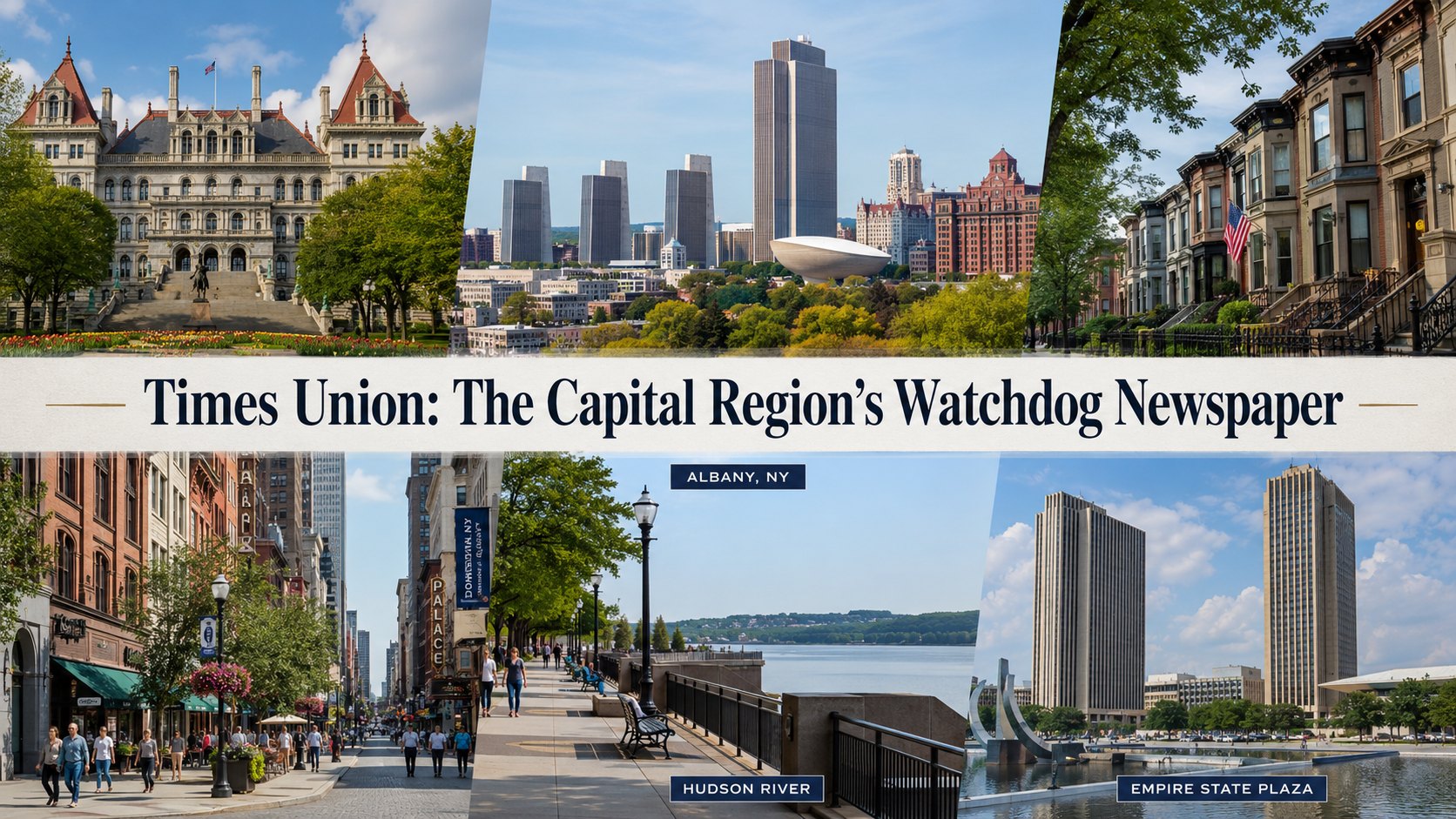

Albany does not need news that floats above the street. It needs reporting that knows the difference between a quiet budget vote in Colonie and a statehouse decision that can change life across New York. That is where Times Union still holds weight for readers who live, work, study, commute, vote, and raise families across the Capital Region.
The Times Union, found online at https://www.timesunion.com/, serves a region where local news has to carry several jobs at once. It has to watch Albany City Hall, follow state government, track school districts, explain weather trouble before it becomes a crisis, and keep an eye on courts, police, traffic, housing, and business changes. A reader searching for Capital Region crime news today may also need context on bail policy, court backlogs, neighborhood safety, or a state law being debated a few miles away at the Capitol.
That mix makes the Times Union different from a simple headline feed. Its core audience is not only Albany. It stretches through Troy, Schenectady, Saratoga Springs, Colonie, Bethlehem, Guilderland, Rensselaer County, Saratoga County, and smaller communities that often get lost when statewide news becomes too broad. For readers who follow the Albany local news category, the Times Union is one of the main publications worth knowing because it sits close to the places where local decisions are made.
Local readers also need a source that can connect neighborhood events to larger New York issues without making everything feel like a New York City story. NYC breaking crime updates, NYC subway crime news, and NYC mayor news updates matter to many statewide readers, but Albany has its own rhythm. The Capital Region has state workers, college campuses, highways, river towns, older housing stock, suburban school districts, and public agencies that shape daily life in quieter but serious ways.
A good review of the Times Union should not pretend the site is perfect or that every reader will use it the same way. Some people visit for politics. Some check school closings. Some want business stories, high school sports, restaurant news, obituaries, or weather alerts. The value of the Times Union is that it gives the Capital Region a central news habit, and in a region built around government, education, health care, and commuting, that habit still matters.
The Capital Region Needs a Newspaper That Understands Power Up Close
Albany is not only another city on a map. It is the seat of New York state government, and that gives the local press a heavier job than it has in many similar-sized markets. A street closure, a union dispute, a court ruling, or a housing proposal in this region can sit beside legislative fights that affect millions of people outside Albany County.
That is one reason the Times Union earns its watchdog label. The site’s public identity is tied to local news and watchdog reporting, especially around state government and politics. For readers, that matters because political stories in the Capital Region are not faraway theater. They touch paychecks, public pensions, school aid, taxes, infrastructure, health care rules, and public safety policy.
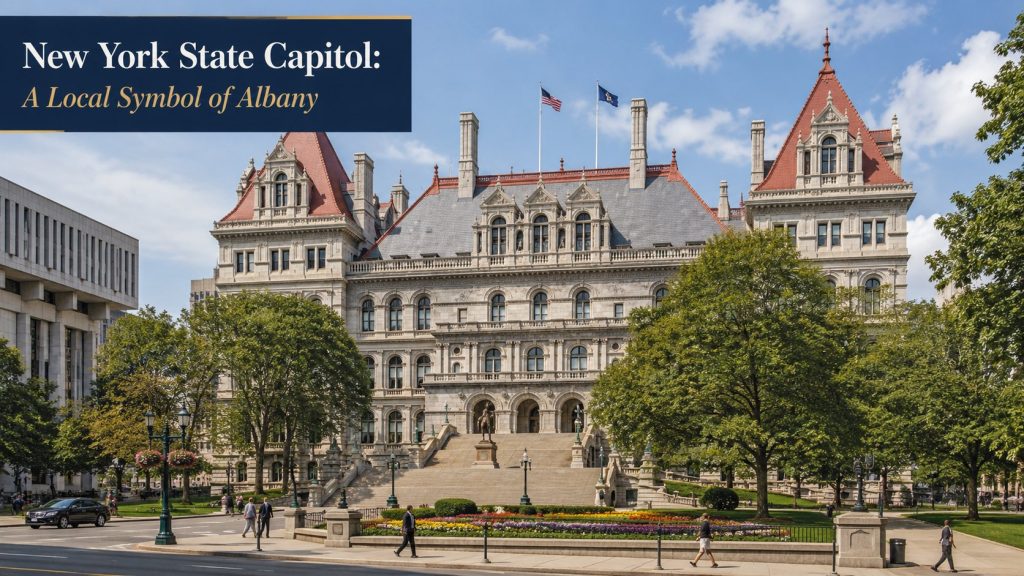
Albany’s Local Story Often Begins at the Capitol
A reader who wants New York politics news today may land on stories that begin in Albany but end up affecting Buffalo, Queens, Nassau County, Rochester, the Hudson Valley, and the North Country. That gives the Times Union a dual role. It is a local paper for the Capital Region, but it also covers the machinery of New York government from the place where that machinery operates.
This is especially useful for people who do not want state politics reduced to personality fights. Albany politics can be procedural, slow, and full of details that seem boring until they change a household budget or a school district plan. A watchdog newspaper has to sit through that dullness and come back with the part that matters.
The Times Union’s advantage is proximity. Reporters covering government from Albany can pay attention to committee fights, agency decisions, ethics questions, court challenges, budget language, and local reactions. That type of coverage helps readers understand why a state decision may show up later as a property tax issue, a school funding change, or a transportation project.
Watchdog Reporting Works Best When It Stays Local
Watchdog journalism does not only mean exposing scandal. It also means asking why a public board delayed a vote, why a development moved ahead with limited input, why a police policy changed, or why a state agency took a position that affects local residents. In the Capital Region, those questions can involve city officials, county leaders, state departments, school boards, courts, and public authorities.
This is where the Times Union can be most useful for regular readers. A person in Albany may not have time to attend a meeting about a bus station, a zoning change, or a school budget. A parent in Bethlehem may only need to know how a state education rule affects classrooms. A commuter in Clifton Park may care less about political drama and more about whether transportation money will improve a dangerous corridor.
For wider context, readers can also follow the Capital Region local news hub when they want a broader view of Albany-area stories beyond one publication. The Times Union fits into that habit as a source with deep roots and a clear regional focus.
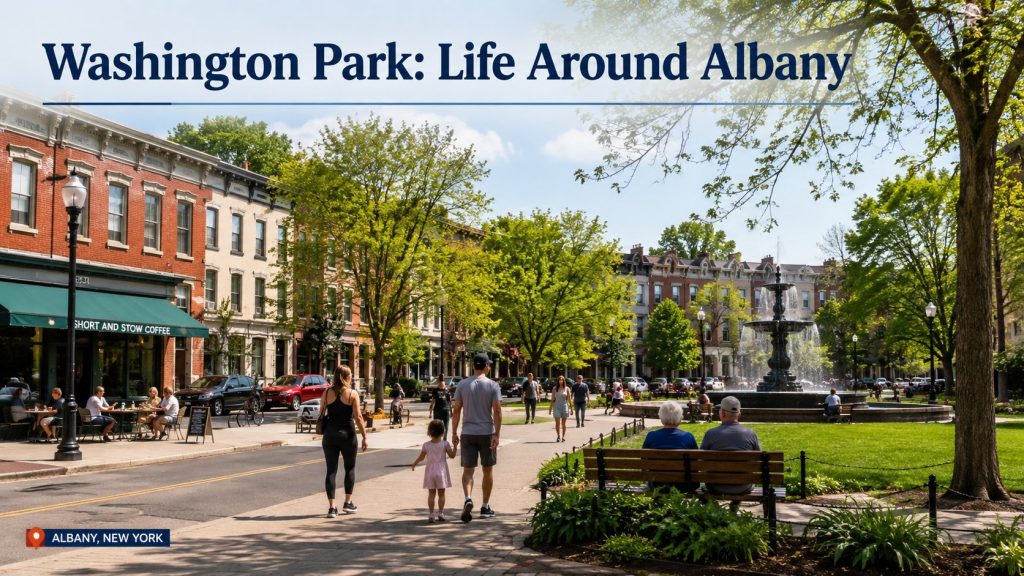
Public Safety Coverage Has to Be More Than Sirens
Crime and police coverage is one of the hardest parts of local news to do well. Readers want fast updates when something serious happens, but they also deserve careful context. A stabbing, crash, robbery, fire, or court case can affect a neighborhood long after the first alert fades.
The Times Union is useful here because the Capital Region has many layers of public safety coverage. Albany police, Troy police, Schenectady police, State Police, county sheriff’s offices, fire departments, emergency crews, prosecutors, and courts all overlap. A single incident may involve several agencies and more than one community.
Crime, Courts, and Police News Need Follow-Through
Readers searching for New York police news today or New York court news today are often trying to understand more than what happened. They want to know whether an arrest was made, what charges were filed, where the case is headed, and whether the incident is part of a larger concern. In Albany, that might mean downtown safety, college-area incidents, South End concerns, Central Avenue crashes, or cases moving through county court.
Capital Region police news today has a different feel from big-city crime coverage. The region includes urban blocks, small towns, campuses, highways, parks, and rural roads. A local source has to know when a story is mainly a neighborhood concern and when it belongs in a bigger discussion about policing, addiction, road safety, youth violence, or public spending.
The Times Union can help readers follow that full chain. Fast public safety updates are useful, but the stronger value comes when reporting keeps going after the first police statement. Court dates, plea agreements, sentencing, lawsuits, disciplinary records, and public records can change how a story should be understood.
The Capital Region’s Safety Map Is Not One Place
Albany shooting news today is not the same reader need as New York robbery news updates or Capital Region emergency news updates. Each phrase points to a different concern. A shooting may raise questions about neighborhood safety. A robbery may affect small businesses or transit corridors. An emergency update may involve fire crews, power outages, hazmat concerns, or weather damage.
A useful local news site keeps these categories connected without turning them into noise. The Capital Region has busy roads like I-87, I-90, I-787, Route 7, Route 9, Central Avenue, Western Avenue, and the Northway. Public safety coverage in this area often includes crashes, road closures, winter pileups, wrong-way driving cases, and emergency response delays.
That is why Capital Region accident news today is not a side topic. It can affect school pickup, hospital commutes, state worker travel, delivery routes, and weekend trips to Saratoga or the Adirondacks. A local newsroom that treats accidents as part of the daily civic map gives readers more value than one that only posts short incident blurbs.
Schools, Families, and Young People Deserve Serious Local Attention
School coverage can look small until a family needs it. A budget revote, closing alert, bus issue, discipline policy, sports eligibility rule, or curriculum change can hit a household faster than most state headlines. In the Capital Region, school news crosses city and suburban lines, and that makes a strong local source important.
The Times Union’s education coverage matters because the region is full of different school environments. Albany City School District does not face the same pressures as Shenendehowa, Bethlehem, Guilderland, North Colonie, South Colonie, Troy, Schenectady, Saratoga Springs, or smaller rural districts. A regional newspaper has to respect those differences.
School Budget Votes Are Local Democracy in Plain Clothes
Albany school news today may sound routine, but school budgets are one of the clearest ways residents see public choices up close. Voters are not only deciding on numbers. They are deciding class sizes, staffing levels, transportation, building repairs, sports, arts programs, library resources, and local tax pressure.
The Times Union can help by explaining what is actually at stake before and after a vote. That matters in districts where turnout may be low, proposals may be confusing, and the consequences may not be clear until the next school year. A school budget story is not only for parents. It affects homeowners, renters, teachers, students, bus drivers, businesses, and future buyers looking at a district.
Capital Region public school updates also need to include the practical side of family life. Weather closings, delayed openings, school safety notices, board decisions, construction plans, and graduation changes may not sound dramatic, but they shape daily routines. Local news earns trust when it treats those details with respect.
Colleges Add Another Layer to Regional Coverage
The Capital Region is also a college region. University at Albany, Rensselaer Polytechnic Institute, Union College, Siena College, Russell Sage, Skidmore, Albany Law School, Albany Medical College, and community colleges all shape the local economy and culture. Student housing, campus safety, research, sports, hiring, and town-gown relationships belong in the local news picture.
This gives the Times Union more angles than a standard city paper might have. A story about a campus is also a story about landlords, nearby businesses, traffic, policing, nightlife, internships, health care, or regional workforce needs. The best local education coverage understands that a college town issue can spill into surrounding blocks.
Readers who search for New York school news today may want statewide policy. Readers searching for Capital Region public school updates often want immediate local guidance. A useful regional paper should serve both needs without confusing them, and the Times Union is built for that split.
Roads, Weather, and Emergency Updates Are Daily Survival Tools
The Capital Region’s weather can change the entire day. Snow, ice, lake-effect bands, heavy rain, wind, flooding, heat, and sudden storms can turn a normal commute into a long crawl. In a region where many people drive between counties, weather and traffic coverage is not filler. It is practical information.
Times Union’s weather, school closing, traffic, and breaking news sections make sense for this market. A reader in Albany may be checking the same site for a storm update, a crash on I-90, a school delay, and a state office closure. That is a real local news habit, not casual browsing.
Storm Coverage Has to Know the Region’s Roads
A Capital Region weather alert today is not useful if it only says “storms possible.” Readers need to know where flooding is likely, which roads have delays, whether power outages are spreading, and which towns are seeing the worst conditions. A severe storm in Saratoga County can mean something different from flash flooding near the Mohawk River or wind damage in Rensselaer County.
The Times Union is valuable when it connects weather to local consequences. A storm story should help readers understand power outages, road closures, school changes, airport delays, tree damage, emergency shelters, and cleanup. That is why Capital Region storm news updates matter. The storm itself is only part of the story. The local impact is what people live through.
New York weather alert today is a broad search phrase, but the Capital Region needs its own reading. Albany sits near enough to the Hudson Valley, Adirondacks, Mohawk Valley, and western New England that weather patterns can vary widely within a short drive. Local reporting helps readers avoid treating the region like one flat forecast zone.
Traffic Coverage Is a Quality-of-Life Issue
Albany traffic news today may involve more than congestion. It can include crash investigations, construction schedules, bridge work, lane closures, bus service, CDTA changes, snow routes, pedestrian safety, and plans for rail or highway improvements. For commuters, those details matter more than a broad traffic map.
The Capital Region is not built around NYC subway crime news in the daily way New York City is, but transit safety and transportation access still matter here. Bus riders, Amtrak passengers, students, hospital workers, state employees, and downtown workers all depend on local transportation systems. Coverage of CDTA, Albany-Rensselaer station, airport access, bus station plans, bike lanes, sidewalks, and road redesigns all belongs in the same civic conversation.
That is where Capital Region transportation news today has real value. It helps readers see the links between planning decisions and everyday movement. A bus stop location, a dangerous intersection, a delayed rail idea, or a highway closure can affect who gets to work, who can reach school, and which businesses get foot traffic.
Business, Housing, and Real Estate Coverage Show Where the Region Is Headed
Local business coverage is often where a region’s future appears first. A restaurant closes. A warehouse project gets approved. A biotech firm expands. A downtown building sells. A hospital hires. A college launches a program. A small manufacturer adds jobs. These stories can look separate, but together they show where the Capital Region is moving.
The Times Union’s business coverage is one of its stronger everyday values because the region’s economy is not built on one thing. Government is central, but so are health care, higher education, nanotechnology, energy, logistics, tourism, construction, restaurants, and small businesses.
Albany Business News Needs Both Big Employers and Small Corridors
Albany business news today may involve a state contract, a Lark Street storefront, a warehouse near the Thruway, a Wolf Road retail change, a Troy restaurant, or a Schenectady technology employer. A regional paper has to cover both boardroom moves and street-level changes.
That balance matters because readers do not experience the economy through press releases. They experience it through rent, wages, job postings, empty storefronts, grocery prices, child care costs, downtown parking, and whether a favorite place stays open. A useful local business section can connect those daily signals to bigger trends.
The Times Union appears especially useful for readers who want business stories with place names attached. Albany, Troy, Schenectady, Saratoga, Colonie, Clifton Park, Malta, and Rensselaer all have different business identities. The best coverage does not flatten them into one “upstate economy.”
Housing Coverage Should Not Stop at Listings
Capital Region housing news updates are more than real estate chatter. Housing affects taxes, school enrollment, downtown development, homelessness, code enforcement, neighborhood change, senior living, student rentals, and worker retention. A new apartment plan in Albany or a housing dispute in Schenectady can reveal pressure points that have been building for years.
New York real estate news often focuses on price swings and big markets, but Capital Region real estate news needs a more grounded view. The reader may want to know why rents are rising, whether office buildings can become apartments, how zoning changes affect a town, or why a mobile home park dispute matters.
The Times Union can help when it treats housing as both a market issue and a community issue. That means covering sales and development, but also tenants, infrastructure, public hearings, neighborhood resistance, affordability, and the human cost of slow action.
| Local reader concern | Why Times Union coverage can help |
|---|---|
| A school budget revote in a small district | It can explain turnout, tax impact, program cuts, and what happens next. |
| A crash on I-90 or the Northway | It can connect the incident to commute delays, safety concerns, and police follow-up. |
| A housing project in Albany or Troy | It can show how zoning, affordability, parking, and neighborhood input fit together. |
| A state government decision | It can translate Albany policy into local consequences for families and workers. |
| A storm moving across several counties | It can track outages, school changes, road closures, and cleanup by community. |
| A business opening or closing | It can show what the change means for jobs, downtown life, and nearby residents. |
The Site Works Best When Readers Use It Like a Daily Regional Desk
A local news site is more useful when readers know how to use it. The Times Union is not only for major breaking stories. It can be part of a daily scan for government, courts, schools, business, weather, sports, opinion, food, events, and community life.
That daily habit matters in the Capital Region because local issues can move quietly. A planning proposal may be easy to miss. A primary election may draw limited attention. A school budget may fail once and return for a revote. A weather alert may shift from watch to warning by afternoon. A regional paper helps readers catch these changes before they feel blindsided.
The Most Useful Readers Are Often the Busy Ones
The Times Union is especially valuable for people who do not have time to monitor every agency, town board, and school district. A parent in Guilderland, a nurse commuting to Albany Med, a student in Troy, a state worker downtown, a small business owner in Schenectady, or a retiree in Saratoga may all need different parts of the site.
The paper can help these readers by gathering many threads into one place. That does not mean every topic will matter every day. It means the site gives people a reasonable place to check before making decisions.
Readers may find it useful to bookmark the Times Union for several practical reasons:
- To follow Albany and Capital Region government without reading meeting packets themselves.
- To check weather, school closing, and emergency updates during storms.
- To track public safety stories beyond the first police statement.
- To watch business changes in Albany, Troy, Schenectady, Saratoga, and nearby towns.
- To follow courts, elections, housing, and transportation issues that shape daily life.
- To keep up with local sports, food, culture, and community events without leaving the regional news environment.
These are not fancy use cases. They are normal local life. That is the point. A strong regional newspaper becomes valuable because it helps people handle ordinary decisions with better information.
Search Intent Is Different in Albany Than in Manhattan
A reader typing NYC business news today may expect stories about Wall Street, retail corridors, commercial rents, startups, restaurants, or City Hall policy. A reader in Albany looking for business news may want a different mix: state contracts, downtown redevelopment, warehouse projects, hospitals, chip-related employers, universities, small restaurants, and suburban retail.
The same idea applies to New York fire news today, New York accident news today, and NYC emergency news updates. Big-city search phrases can bring broad traffic, but local relevance comes from the details. The Capital Region needs coverage that names local roads, departments, towns, courts, and neighborhoods.
The Times Union is built around that kind of place-based intent. It can still connect to statewide topics, but its usefulness comes from its regional lens. That is also why a site like NY News Ledger’s local news section can sit beside it as part of a wider reading habit for people who want New York local stories organized by area.
Opinion, Culture, Sports, and Food Make the Paper Feel Like the Region
A watchdog newspaper cannot live on investigations alone. People also need stories that show how a place feels. In the Capital Region, that includes high school sports, college rivalries, restaurants, arts venues, local history, theater, festivals, neighborhood debates, and the small public arguments that give a region its personality.
The Times Union’s value grows when it covers both hard news and civic texture. A restaurant story can reveal downtown confidence. A sports story can show school pride. A theater review can point to cultural energy. A column about a neighborhood dispute can capture the mood of a city better than a policy brief.
Local Sports Carry More Than Scores
New York local sports news can mean pro teams, college programs, high school playoffs, arena football, hockey, basketball, soccer, horse racing, and community leagues. In the Capital Region, sports coverage has its own special mix. Siena basketball, UAlbany athletics, RPI and Union hockey, Saratoga racing, high school championships, and local athletes all matter to different audiences.
The Times Union’s sports coverage is useful because regional sports often builds identity across towns. A high school playoff game may bring out alumni, parents, students, and local businesses. A college rivalry can pull attention from multiple counties. A Saratoga racing story can connect sports, tourism, business, and tradition.
Sports also creates a different entry point for readers who may not start with politics or courts. Someone who visits for game coverage may stay for school news, weather, or a local column. That cross-over effect is part of what keeps a regional news brand alive.
Food and Culture Help Readers Recognize Their Own Region
Food coverage is not soft filler when it is done locally. Restaurant openings, closures, health trends, brewery news, farmers markets, diners, bakeries, and neighborhood spots tell readers what is changing. A place like Albany does not only exist through government buildings. It exists through lunch counters, corner bars, coffee shops, family-owned restaurants, and weekend plans.
Culture coverage plays a similar role. Albany, Troy, Saratoga Springs, Schenectady, Hudson, and nearby arts communities each have their own scenes. Music, theater, galleries, historic sites, libraries, festivals, and local traditions help readers see the region as more than a commute pattern.
This is one reason the Times Union can feel broader than a hard-news site. It can review power, but it can also reflect life. That mix gives readers more reasons to return.
The Review Verdict: Strongest When It Connects Local Detail to Regional Meaning
The Times Union’s main strength is not that it covers every possible story. No local outlet can. Its strength is that it understands the Capital Region as a connected place. Albany politics, Troy development, Schenectady business, Saratoga culture, suburban schools, state government, courts, weather, and transportation all overlap in real life.
That overlap is where the site can be most useful. A housing story may involve a school district. A business story may involve state incentives. A crime story may end in court. A storm story may become a transportation story. A school story may become an election issue. The Times Union has the regional frame needed to follow those connections.
Where the Site Feels Most Reliable
The Times Union feels most valuable when readers need a grounded look at public affairs. State government coverage, local politics, courts, development, public safety, business, and weather all fit its identity. The site is also helpful for readers who want to understand the region without jumping between many smaller sources every day.
That does not mean every story will satisfy every reader. Some may want more neighborhood-level reporting. Some may want faster updates. Some may run into subscription limits. Some may prefer a more local voice for their town. Those are fair limits for a regional paper.
Still, the Times Union gives the Capital Region something important: a serious news base. It is one of the few publications with the scale, history, and local knowledge to treat Albany-area news as more than a category label.
Why It Belongs in a Capital Region News Routine
Readers who already follow neighborhood Facebook groups, town alerts, police posts, school emails, or local blogs can still benefit from the Times Union. Those sources may be fast, but they are often fragmented. A newspaper adds editing, context, follow-up, and a wider map.
The best use of the Times Union is not passive trust. Readers should compare, question, and read widely. But as a starting point for Capital Region awareness, it remains one of the strongest options. It gives structure to a region that can otherwise feel split between Albany insiders, suburban households, college communities, and smaller towns.
For broader discovery, readers can also explore NY News Ledger alongside the Times Union when they want more New York local coverage organized across regions. The Times Union’s role is more specific: it keeps the Capital Region visible, connected, and accountable.
Final Take on Times Union for Capital Region Readers
The Times Union matters because the Capital Region is not easy to cover from a distance. Albany’s government role, the region’s spread-out communities, its layered school systems, its old and new housing concerns, its weather swings, and its mix of city, suburb, campus, and rural edges all demand local judgment.
For a reader trying to follow New York election news today, the Times Union can explain how statewide politics looks from the place where many decisions happen. For someone watching Capital Region neighborhood news updates, it can connect block-level concerns to city and county choices. For families checking Capital Region public school updates, it can turn board actions and budget votes into practical information.
The site is also useful because it does not have to choose between Albany and the wider region. It can cover a downtown issue, then follow a Saratoga sports story, a Schenectady business change, a Troy development plan, a Rensselaer County court case, or a storm that moves across several counties. That range is part of its value.
Readers should not treat the Times Union as the only source they need. No single outlet deserves that role. But for anyone who wants a serious, locally grounded way to follow Albany and the Capital Region, the Times Union deserves a place near the top of the daily reading list.
The best local newspapers do not make a region look simple. They make it easier to understand. On that measure, the Times Union remains one of the Capital Region’s most important watchdog news sources.